How to Use Lemon Vibrators When Sensation Shifts After Menopause
Here's the thing nobody tells you about menopause and pleasure: your clitoris doesn't stop working. It changes how it works. And once you understand what's actually happening under the skin, the adjustments become obvious.
After estrogen drops, clitoral tissue thins slightly. Blood flow takes longer to reach peak arousal. The nerve endings themselves remain unchanged, which is the good news. But the tissue housing those nerves is more sensitive to direct friction and less cushioned than it was before. A lemon vibrator, with its gentle suction design, is often exactly what post-menopausal bodies need. Not because you're broken, but because the tool finally matches the anatomy.
Why clitoral sensitivity actually shifts (and what stays the same)
Estrogen supports tissue thickness, lubrication, and vascular responsiveness. When it drops, three specific changes happen:
Tissue becomes more delicate. The vulval epithelium thins by about 25 percent on average. This sounds scary but it's not. It means direct pressure that felt fine at 35 might feel uncomfortable at 55. A suction-based lemon vibrator distributes pressure differently than a traditional vibrator, so many post-menopausal people find it gentler and more effective at the same time.
Arousal takes longer. Your clitoris still engorges with blood during arousal, but it takes 15-25 minutes instead of 5-10. This isn't a loss. It's a shift that often leads to deeper, more full-body pleasure once arousal arrives.
Lubrication changes. Vaginal lubrication decreases, yes, but clitoral arousal and vaginal lubrication are separate systems. You can be fully aroused and still need external lubricant. Water-based lube applied before using a lemon vibrator bridges this gap instantly.
What doesn't change: the clitoral nerve density, the neural pathways for orgasm, or your brain's capacity for pleasure. Orgasms after menopause are neurologically identical to orgasms before. Many people report they're actually more intense.
Photo by Vanessa Loring on Pexels
The lemon vibrator advantage for post-menopausal bodies
A lemon clitoral vibrator uses air-suction technology instead of traditional vibration. Instead of the toy pressing and oscillating against tissue, it creates a gentle vacuum around the clitoral head. Why does this matter after menopause?
Suction distributes pressure differently. Suction pulls tissue slightly into the cup rather than hammering it from outside. For thinned, more sensitive tissue, this is a completely different sensation profile. Many people who find traditional vibrators too intense after menopause find the lemon vibrator's suction pattern actually more comfortable and far more effective.
It's easier to control intensity. A lemon vibrator typically starts on a low suction pattern (often pattern 1 or 2 of 5-8). You can spend as long as you need at each level, which is ideal when arousal naturally takes longer. There's no pressure to "perform" or rush.
It works with lubricant. A water-based lube helps a lemon vibrator create better seal and smoother sensation. Silicone vibrators can be finicky with lubrication, but a lemon clitoral vibrator was designed for it.
How to adjust your technique after menopause
You're not starting from scratch. You're recalibrating. Here are the real shifts that work:
Start lower than you think you need. If you used a traditional vibrator at level 4, begin with your lemon vibrator at level 2. You're not regressing. You're matching the tool to current tissue sensitivity. Many post-menopausal users find they actually want less overall intensity because suction sensation feels more concentrated than vibration.
Extend your warm-up. Budget 20-30 minutes instead of 10. This isn't wasted time. Longer arousal often means fuller body involvement, deeper sensation, and more satisfying orgasms. It's not "taking longer." It's different.
Use water-based lubricant every time. Not because you're dry in a pathological sense, but because thin tissue benefits from a frictionless environment. Apply it to the lemon vibrator before use, not after. This creates an immediate seal and more consistent sensation.
Explore the patterns before jumping to max. A lemon vibrator has 5-8 distinct patterns. Post-menopause, the gentle pulse or wave patterns (often 2-4) often feel better than the chaotic patterns. Spend 3-5 minutes at each pattern. You might find your orgasm is strongest at pattern 3, not pattern 8.
Angle the vibrator for direct clitoral contact. Unlike penetrative devices, a lemon vibrator works best when the opening of the cup is directly against your clitoris. If you're positioning it over the clitoral hood only, move it slightly lower. The sensation changes noticeably.
When tissue sensitivity feels too high
Sometimes even a lemon vibrator's gentlest setting feels like too much. This is worth investigating because it usually has a clear solution.
Check your lubrication. Dry tissue under suction can create a sensation that feels sharp rather than pleasurable. Add more water-based lube. This alone fixes the problem for most people.
Try a barrier. A small piece of cotton fabric or a silk eye mask placed between the clitoral head and the vibrator cup can reduce direct sensation intensity while keeping the overall suction effect. It sounds like a hack, but it works.
Ensure you're actually aroused. Unaroused tissue is always more sensitive. If you're starting at level 1 without being fully aroused, back up. Spend 10 more minutes with a partner, with erotic content, or with manual stimulation to clitoris-only arousal. Then introduce the lemon vibrator.
Consider vulvar skin health. If your vulva itches, burns, or feels raw during normal activities (not just with the toy), you might have genitourinary syndrome of menopause (GSM), a treatable condition. Talk to a menopause-trained gynecologist. A topical estrogen cream often resolves it in weeks.
When sensation becomes more intense
Honestly? This is the most common outcome people don't expect. Post-menopausal bodies often experience more localized, more concentrated pleasure, and sometimes the most powerful orgasms of their lives.
Why? Mental clarity. After decades of cycling hormones, fertility concerns, and performing sexuality for others, many people report that the mental noise finally quiets. That focus lands straight on sensation. The clitoris is still fully innervated. The neural pathways are intact. But now the brain isn't dividing attention six ways.
If orgasms feel stronger, more localized, or more full-body than before, that's not a problem to solve. That's your nervous system recalibrating to its new baseline. Lean into it. Some people find they prefer orgasms post-menopause because they feel more stable, less scattered.
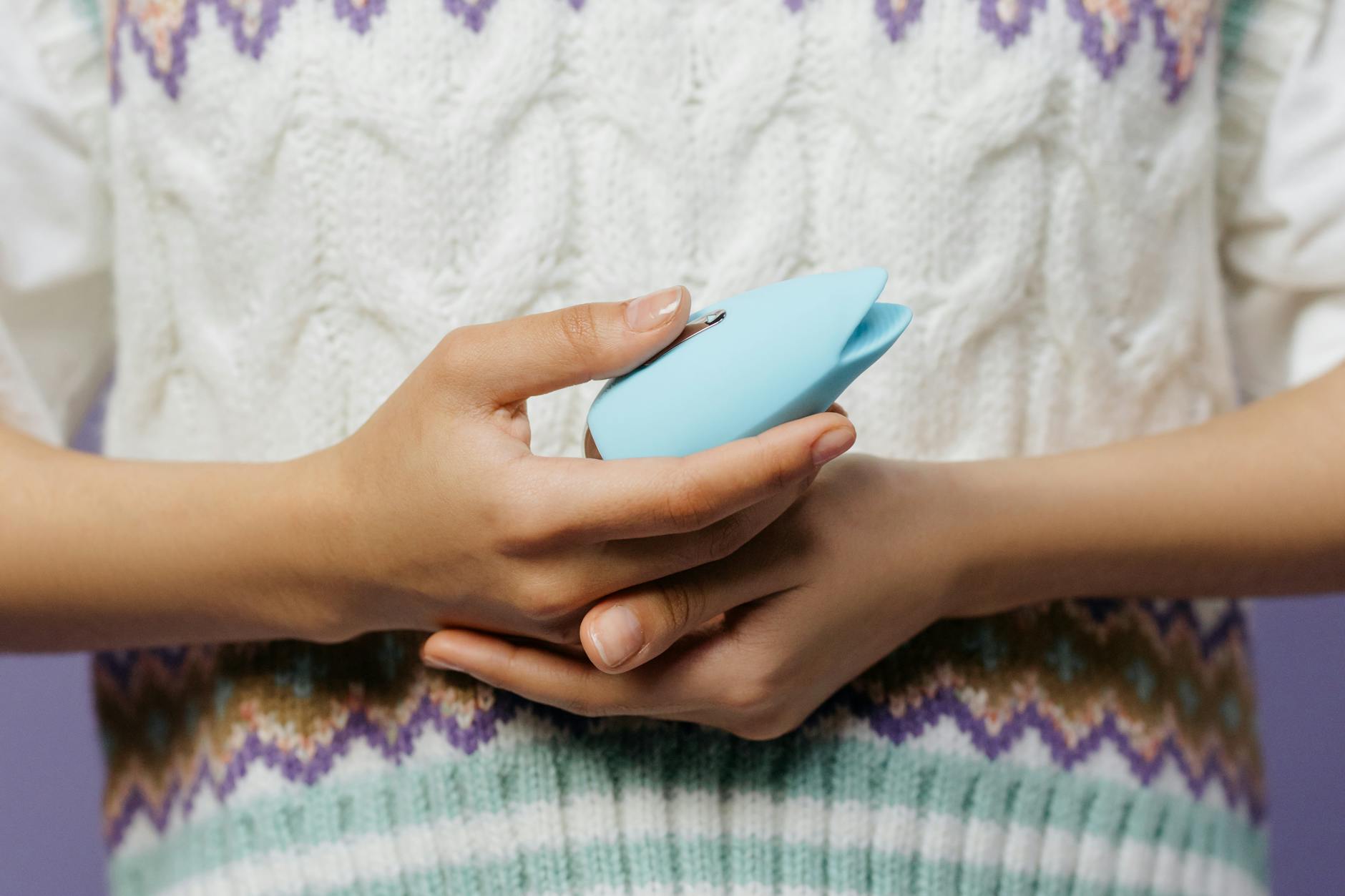
Photo by cottonbro studio on Pexels
Using a lemon vibrator with a partner post-menopause
Menopause is often the moment couples realize they've stopped communicating about pleasure. Here's how to actually use a lemon vibrator together:
Separate the conversations. Don't collapse "my body is responding differently" into "we need to fix our sex life." Those are two different topics. Talk about them apart.
Let your partner see what you like. Use the lemon vibrator solo a few times first. You'll discover which patterns, which speeds, which positioning feels best. Then show your partner. "I like pattern 3 for 5 minutes, then pattern 5" is way more useful than "I don't know, just see what works."
Use it as foreplay, not destination. A lemon vibrator is excellent for 10-15 minutes of clitoral focus before other forms of intimacy. Or after. Or solo. The point is: it's a tool, not the whole event. This takes pressure off both of you.
Adjust expectations about timing. If you're taking 25 minutes to reach orgasm now and your partner is used to 10, that's a logistics conversation, not a desire conversation. Some couples shift to toys as the main event and reserve penetration as optional aftermath. Some schedule longer sessions. The structure you pick matters less than being on the same page about it.
The broader menopause shift
Menopause often arrives alongside other life changes: kids leaving home, career transitions, shifts in partnership structure, grief. The temptation is to assume all pleasure changes are hormonal. Sometimes they're not. Menopause is real and measurable, but it's not the only variable in your sex life.
If pleasure feels completely flat or absent after menopause, that's worth separating into two questions: Is this tissue-based (treatable with tools, lubricant, medical support)? Or is this emotional-based (relationship strain, depression, loss of identity)? Both are real. Both need different responses.
Menopause changes how your clitoris works. It doesn't change whether you can feel pleasure. The lemon vibrator bridges that gap.
A lemon clitoral vibrator is designed specifically for this transition. The suction mechanism, the multiple patterns, the ability to start at genuinely low intensity and work up at your own pace. These features aren't trendy. They're anatomically sound for post-menopausal bodies.
FAQ: Lemon Vibrators and Menopause
Can I use a lemon vibrator if I'm post-menopausal and haven't used toys in years?
Absolutely. A lemon vibrator is actually an ideal starting point because it's gentler than traditional vibrators and more intuitive. Start at level 1 or 2. Use water-based lubricant. Spend 20-30 minutes on arousal before using it. Many people find it easier to orgasm with a suction device than with vibration-only toys, especially post-menopause.
Will using a lemon vibrator make my sensitivity worse over time?
No. Regular toy use doesn't desensitize your clitoris. Your nerve endings don't adapt to vibration the way skin adapts to pressure. What sometimes happens: you find what works and you stop trying other approaches. If you want variety, rotate between different patterns on your lemon vibrator or occasionally use different toys. But "numbing out" from vibrator use is a myth.
What if my partner thinks using a toy means I don't want them anymore?
This is a real worry for a lot of people. The honest answer: a lemon vibrator isn't a replacement for partnership. It's a tool that makes clitoral stimulation possible when tissue has changed. Many couples use toys together. Your partner can hold the device, control the patterns, or use it on you while you focus on each other. The toy isn't competition. It's a bridge. How to Use a Lemon Vibrator When First Trying Toys as a Couple covers this conversation in detail.
Is water-based lubricant necessary with a lemon vibrator post-menopause?
Not strictly necessary, but strongly recommended. Post-menopausal tissue is thinner and more prone to irritation. Water-based lube creates a frictionless environment and helps the suction seal feel smoother. It also protects delicate tissue. Use it every time, even if you produce natural lubrication.
How long does it take to orgasm with a lemon vibrator after menopause?
It varies, but 15-25 minutes is typical. Some people need less, some need more. The key: there's no "right" timeline. Arousal takes longer post-menopause and that's completely normal. Many people find that longer arousal actually leads to more satisfying orgasms because full-body pleasure has time to build.
My clitoris feels less responsive to touch after menopause. Will a lemon vibrator help?
Often yes. A lemon clitoral vibrator provides more concentrated stimulus than manual touch, which can help overcome reduced responsiveness. How Lemon Vibrators Improve Sensation When Your Clitoris Feels Less Responsive to Touch walks through specific techniques for this exact scenario. Start with consistent suction at low intensity for 10-15 minutes during peak arousal.
Moving forward
Menopause changes the timeline and the technique, not the outcome. Your clitoris is still fully alive. Your nervous system is still capable of intense pleasure. The only thing that's really changed is what works now, and how long it takes to get there.
A lemon vibrator meets post-menopausal bodies where they actually are. Not as a workaround or a consolation prize. As a tool engineered for exactly this anatomy. The suction mechanism, the gentle patterns, the control you have over intensity. These aren't gimmicks. They're features designed for tissue that's asking for a different approach.
Your pleasure after menopause isn't a loss or a compromise. It's a recalibration. And once you find what works, it's often deeper and more satisfying than it's ever been.
If you're navigating this transition and feeling stuck, reach out. These conversations deserve clarity and support, not shame.