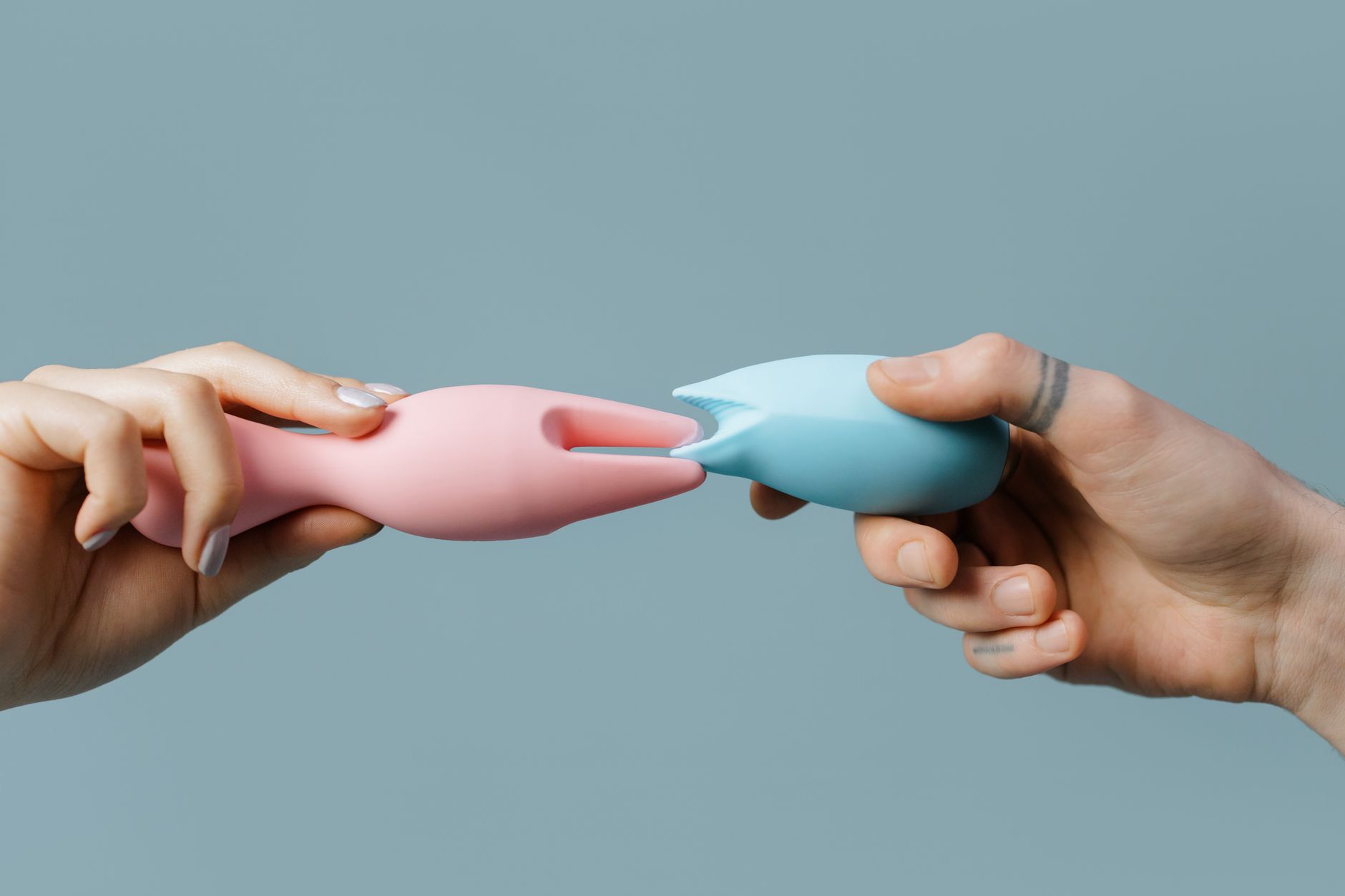
Your clitoris isn't broken. But after months or years of the same type of stimulation, the nerve endings can stop firing quite so eagerly. It's called habituation, and it happens to bodies across every gender and age. You apply vibration directly to the tissue, the nerves respond less intensely, so you turn up the intensity, and the cycle deepens.
Most of what you've tried probably uses friction or direct vibration against the clitoral head. That's not inherently wrong. It's just one way to stimulate. And if that's the only tool in your kit, desensitization can feel like a dead end.
There's another option entirely: air-suction technology. Lemon vibrators, which use suction rather than vibration alone, wake up your clitoris in a completely different way. The sensation is novel to the nerve endings, which means your body responds as if discovering pleasure for the first time.
Your clitoris has roughly 8,000 nerve endings concentrated in a tiny space. When the same pattern of stimulation hits the same spot repeatedly, those nerves adapt. In neuroscience, it's called sensory adaptation. Your nervous system learns the signal and turns down the volume on the response. Higher intensity temporarily overrides this, but only until your body adapts again. You end up in an escalating loop.
This isn't a sign your toy is broken or that your body is failing you. It's actually a sign your nervous system is working exactly as it should.
The catch: most lemon adult toys on the market use simple vibration patterns. If you've been using vibrators for years, your clitoris may have adapted so thoroughly that vibration alone feels almost nothing. This is especially common after:
Using the same vibrator for 5+ years without switching the stimulation pattern. Recovery from medications that dampened sensation (antidepressants, antihistamines). Prolonged high-intensity stimulation that trained your body to expect heavy pressure. Aging, where the tissue itself changes and may require a different approach to arousal.
Instead of vibrating against the clitoral head, air-suction toys like Official Lemon Vibrator's lemon clitoral vibrator use gentle pulses of air to create a stroking sensation inside the tissue. The mechanism is closer to oral stimulation than to direct friction.
Here's what that means neurologically: the stimulation pattern is unfamiliar. Your clitoris doesn't have years of adaptation to air-pulse patterns the way it does to direct vibration. The nerve endings light up differently because the stimulus itself is different. It's not just "stronger vibration." It's a completely different signal.
Research on air-pulse devices shows that people who report habituation to traditional vibrators often regain full sensation and intensity with suction-based toys. The novelty itself is therapeutic. After a few weeks of using lemon vibrators, many people report that their original vibrators feel stimulating again. Your nervous system isn't stuck; it just needed a different input.
One of the counterintuitive benefits of clitoral suction toys is that you can achieve intense sensation with gentler overall pressure. A traditional vibrator might need to push hard against sensitive tissue to create enough friction. Air-suction creates suction inside the tissue, which means you can dial back the external pressure entirely.
This matters for anyone whose clitoris feels sore, inflamed, or raw after stimulation. If direct friction leaves you tender, lemon vibrators let you access intense sensation without the mechanical pressure. You're not sacrificing intensity. You're accessing it differently.
Many people also find that air-suction lets them experience multiple orgasms in one session without the tissue fatigue that comes from direct friction. The mechanism just feels easier on the body.
You don't have to choose between your favorite lemon sexual toy and a new approach. Smart pleasure practice often means layering techniques.
Try this sequence: start with 5-10 minutes of lube and manual touch to warm up the tissue and get blood flow moving. Then introduce your lemon vibrator on a low pattern. Let your body feel the difference. After 5-10 minutes, switch back to whatever toy or technique you've used before. Many people find that the novel sensation from air-suction primes the nerve endings to respond more enthusiastically to their original toy.
The switching itself is part of what creates newness for your nervous system. You're not bored. You're just cycling through different inputs so no single pattern gets stale.
If you've tried air-suction toys and still feel nearly nothing, it's worth checking whether desensitization is the whole story.
Medication side effects can absolutely numb sensation, and sometimes a different formulation or dosage from your prescriber helps more than any toy can. Hormonal shifts, especially postpartum or during perimenopause, change how quickly arousal builds and how sensitive your clitoris feels. That's not desensitization; that's biology shifting. Low desire or depression can make pleasure feel inaccessible even if the physical sensation is technically present. These aren't toy problems; they're worth addressing with a therapist or doctor.
If you've been through pelvic trauma, your clitoris might feel numb as a protective mechanism. In that case, the right approach often involves working with a pelvic floor specialist or trauma-informed therapist alongside any toy exploration.
The point: lemon vibrators are genuinely effective at restoring sensation when habituation is the issue. But if something else is at play, a different intervention might serve you better.
If you're switching from traditional vibration to air-suction, expect a short adjustment period. Your clitoris may feel overstimulated the first few times because the sensation is so novel. That usually passes within 3-5 sessions. Start at lower intensity levels and give yourself permission to explore slowly.
After about two weeks of regular use with lemon clitoral vibrators, most people notice that sensitivity comes roaring back. You might find that you can reach orgasm faster, that sensations feel more varied, or that the pleasure feels less flat and more three-dimensional.
Some people also find that taking breaks from any stimulation for a week resets the adaptation cycle completely. If you've been using toys daily for months, even a week off can restore sensation dramatically.
There's often a narrative that if a toy stops working, it's because you're "broken" or because you've somehow harmed yourself through overuse. That's not how bodies work. Adaptation is normal. Your nervous system isn't damaged; it's just learned to filter out a familiar signal.
Swapping to a different technology like a lemon adult toy isn't admitting defeat. It's being smart about how nervous systems actually function. You're not less sexual or less capable of pleasure. You're just exploring a different pathway to the same destination.
If you've been frustrated by desensitization, this is your permission slip to try something completely different. Your clitoris is waiting.
No. Desensitization from repeated stimulation is adaptational, not degenerative. Your nerve endings don't wear out or die. When you change the type of stimulation, the nerves respond again. People who've reported numbness for years often regain full sensation within weeks of switching to air-suction toys. If sensation doesn't return after trying a different stimulation method, that may point to something other than habituation, like medication effects or hormonal shifts, worth discussing with a healthcare provider.
Air-suction creates a completely different nervous system input than direct vibration. Your clitoris has adapted to the vibration pattern over time, which dampens the response. Suction is novel to the nerve endings, so they respond as if encountering the stimulus for the first time. This novelty resets the adaptation cycle. Additionally, suction stimulates inside the tissue rather than against the surface, which activates different neural pathways than direct friction.
Most people notice a difference within the first few sessions as the novelty itself jolts the nervous system awake. More significant sensitivity restoration typically happens within 2-3 weeks of regular use. Some people find that taking a one-week break from all stimulation, then introducing a lemon clitoral vibrator, accelerates the process. Individual timelines vary based on how long the desensitization lasted and what else might be affecting arousal.
Yes, but start very low. Air-suction toys often feel less intense than direct vibration at equivalent settings, but because the sensation is novel, your clitoris might register it as overwhelming at first. Begin at the lowest pattern, use plenty of lube, and let yourself adjust over several sessions. Your sensitivity will normalize quickly as your nervous system gets familiar with the input.
Not necessarily. Many people benefit from rotating between stimulation types. After you've spent time with your lemon vibrator and regained some novelty-based sensitivity, your original toy often feels great again. The key is variety. Novelty is what keeps the nervous system engaged and responsive.
If you've tried lemon vibrators and still feel nothing, the issue may not be desensitization. Consider: medication side effects, hormonal shifts, relationship stress, depression or anxiety, past trauma, or underlying health conditions. These all dampen sensation in ways that no toy can override. A conversation with a therapist, doctor, or sex coach can help identify what's actually at play. Toys are tools for the body you have right now; they're not fixes for conditions outside their scope.