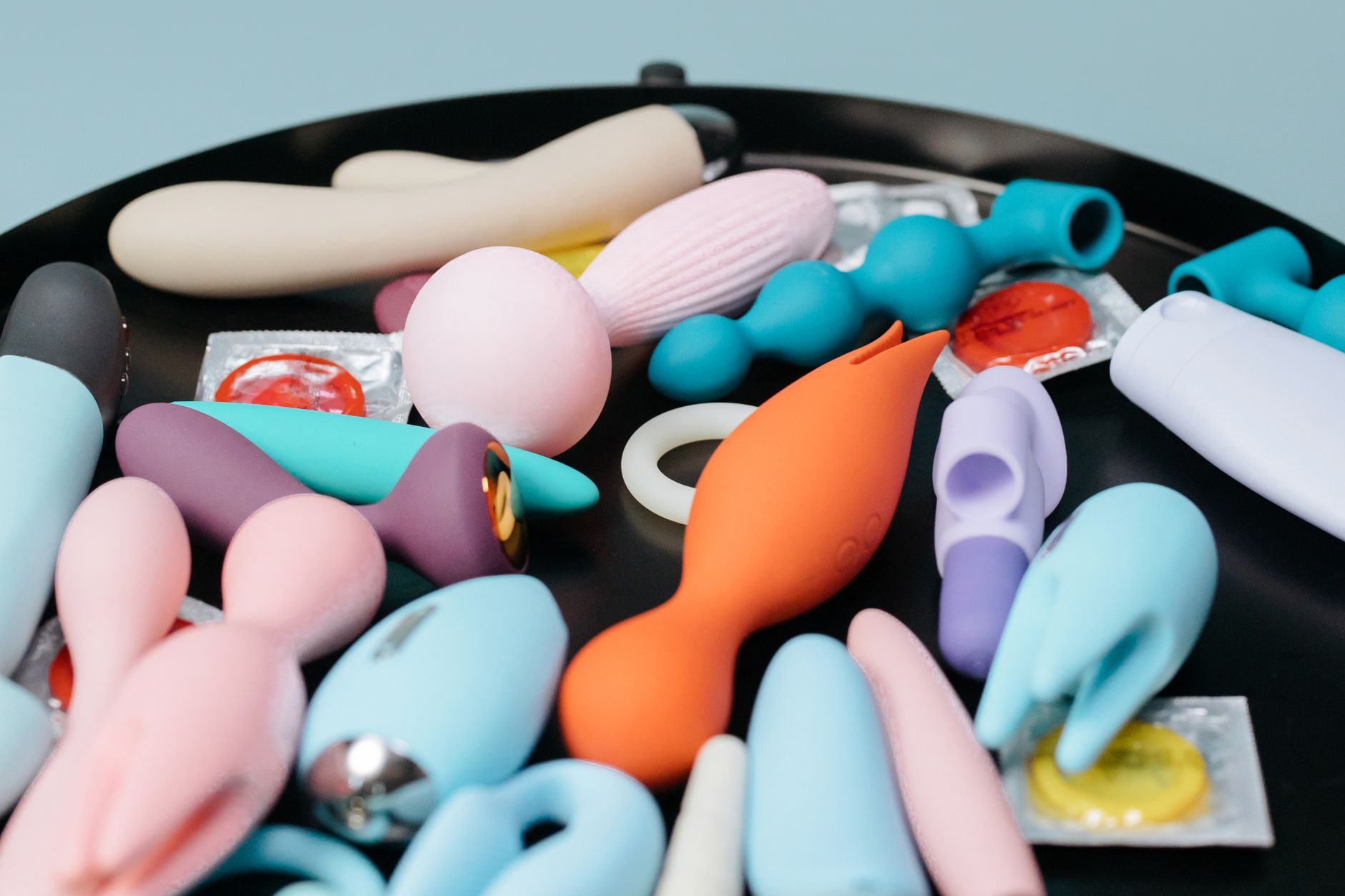
You stop hormonal birth control. Your body does not instantly reset. Instead, it spends 3 to 6 months (sometimes longer) rebalancing estrogen, progesterone, and testosterone levels after years of external hormone management. During that window, pleasure often feels weirdly foreign. Sensation might be muted, arousal slower to build, or orgasms harder to access. This is not permanent. It is also not in your head.
Here's what I see clinically: people who understood the timeline and used tools like lemon clitoral vibrators during the transition reported faster reconnection with their own pleasure. Those who waited for sensation to "bounce back naturally" often struggled longer.
Hormonal birth control suppresses ovulation by flooding your system with synthetic hormones. Your natural cycle is essentially on pause. When you stop, your brain's pituitary gland has to remember how to trigger FSH and LH, which then restart your ovaries. This process takes time.
During the restart, three things change:
Estrogen becomes unpredictable. For a few months, your estrogen levels spike and dip without the steady baseline you've gotten used to. Estrogen influences vaginal lubrication, blood flow to genital tissue, and how sensitive your clitoris feels. When estrogen is erratic, so is sensation.
Testosterone re-emerges. Hormonal birth control suppresses testosterone (yes, all bodies produce it). As it rises again, you might feel a spike in desire. That spike doesn't always coordinate with sensation availability, which creates frustration.
Progesterone patterns restart. After ovulation, progesterone rises in the second half of your cycle. Higher progesterone can dampen libido and make orgasm feel harder to reach. You haven't experienced this pattern in years. It can feel like you've forgotten how your own body works.
A lemon clitoral vibrator like the Official Lemon Vibrator works because it removes friction from the equation. Instead of relying on your body to generate enough blood flow and natural lubrication to respond to direct stimulation, the suction mechanism does the heavy lifting. This matters more than you'd think when hormones are in flux.
Here's the physics: suction stimulates the clitoris by creating a gentle pressure gradient rather than friction. Your clitoris has about 8,000 nerve endings packed into a tiny space. During hormonal transition, those nerves are still there, but blood flow might be slower to arrive. Suction jumpstarts the process.
I typically recommend starting with a lemon vibrator during post-birth-control adjustment because it:
Works without requiring heavy lubrication
Delivers consistent stimulation regardless of how much blood flow you have that day
Feels different enough from manual touch to signal to your brain that sensation is possible
Can be used at lower intensities without losing effectiveness
Month one after stopping birth control, your body is still holding residual synthetic hormones. Sensation often feels muted. If you try a lemon vibrator and feel almost nothing, you haven't broken anything. This is normal.
Start with the Lemon Clitoral Vibrator (also called a lem vibrator) at the lowest setting. Spend 15 to 20 minutes with it, even if orgasm doesn't happen. The goal is not orgasm. The goal is retraining your nervous system to recognize arousal signals. Think of it as a reset for your pleasure hardware.
Use water-based lubricant. Even though suction is gentler on thin tissue, lubricant helps the seal and makes everything feel better. Your body might not be producing much natural lubrication right now. External lube is not a sign of failure. It's a tool that works with your current state.
Your pleasure didn't disappear when you stopped the pills. It's temporarily out of reach. Lemon vibrators are how you reach it.
By week three, you should notice a subtle shift. On some days, the vibrator feels incredible. On others, meh. This is your cycle trying to restart. Track it.
Use a simple calendar. Mark the days you use the vibrator and note: Was sensation strong? Did you orgasm? How quickly? Any pain? After 4 to 6 weeks, a pattern emerges. You'll notice sensation peaks about midway through your month (around ovulation, when estrogen spikes naturally). You'll notice a dip in the week before your period (high progesterone). This is your cycle coming back online.
That information is gold. Once you know your pattern, you can plan intimacy around it rather than fight it. Some of my clients find that using a lemon vibrator on low-sensation days helps them reconnect anyway. Others prefer to wait for peak days and use it as a celebration. Neither is wrong.
Stopping birth control often comes with a story. Maybe you're trying to conceive. Maybe you wanted off hormones. Maybe a side effect finally became unbearable. Whatever the reason, there's usually some emotional weight attached. That weight affects pleasure.
If you're grieving the ease of birth control (no period, no cramps, reliable cycle), that grief can show up as disconnection from pleasure. If you're anxious about fertility or cycle tracking, that anxiety dampens arousal. If you're excited about reclaiming your natural hormones, that excitement can coexist with frustration when sensation doesn't cooperate.
A lemon vibrator is a physical tool, but using it during transition is also an emotional act. You're saying, "My pleasure matters enough to be intentional about it while I adjust." That intentionality, paired with a tool that actually works, changes the experience.
If you have a partner, talk about the timeline. "My body is recalibrating. Sensation might be unpredictable for a few months. I'm using a lemon vibrator to help bridge that gap." Not as an apology. As information. Partners who understand the biology often become collaborative instead of taking muted pleasure personally.
Three things I recommend to nearly every client navigating post-birth-control pleasure:
Schedule rather than wait for spontaneity. Hormone levels fluctuate. Spontaneous desire often doesn't show up for a few months. If you wait for it, you'll go months without pleasure. Instead, pick 2 to 3 days a week. Use your lemon vibrator solo, or with a partner. Scheduled sex (or scheduled solo time) sounds unromantic until you realize it's how you actually stay connected to your own body.
Use the same lemon vibrator consistently. Your nervous system learns patterns. Using the same tool (say, the Official Lemon Vibrator) every time helps your brain anticipate the sensation and respond faster. Switching between different toys confuses the relearning process.
Expect a 3 to 6 month arc. By month 3, most people report significant improvement. By month 6, most people feel like they're back to baseline or better. If you're still struggling at month 6, see a gynecologist. Rarely, post-birth-control syndrome involves persistent hormone imbalance that benefits from support.
If pleasure remains completely absent after 4 months, or if you experience pain, see a provider. Post-birth-control hormonal adjustment is real, but it shouldn't be crippling.
If desire never returns even as sensation improves, talk to a therapist or relationship coach. Low desire sometimes lives in the emotional layer, not the physical one. A lemon clitoral vibrator can't fix relationship tension, unresolved grief, or burnout. Those need different tools.
If you develop vaginal pain during pleasure (not just tightness or nervousness, but actual pain), get checked for yeast infections, bacterial imbalances, or other conditions common in the post-birth-control window. Sensation should feel good, not painful.
Stopping hormonal birth control often marks a turning point. You get curious about your own cycle. You notice how your energy shifts through the month. You start using tools like lemon vibrators intentionally instead of reflexively. Many people tell me that this period, as frustrating as it is, leads to deeper pleasure knowledge than they had on birth control.
Your body is not broken. It's waking up. A lemon vibrator is how you say hello.