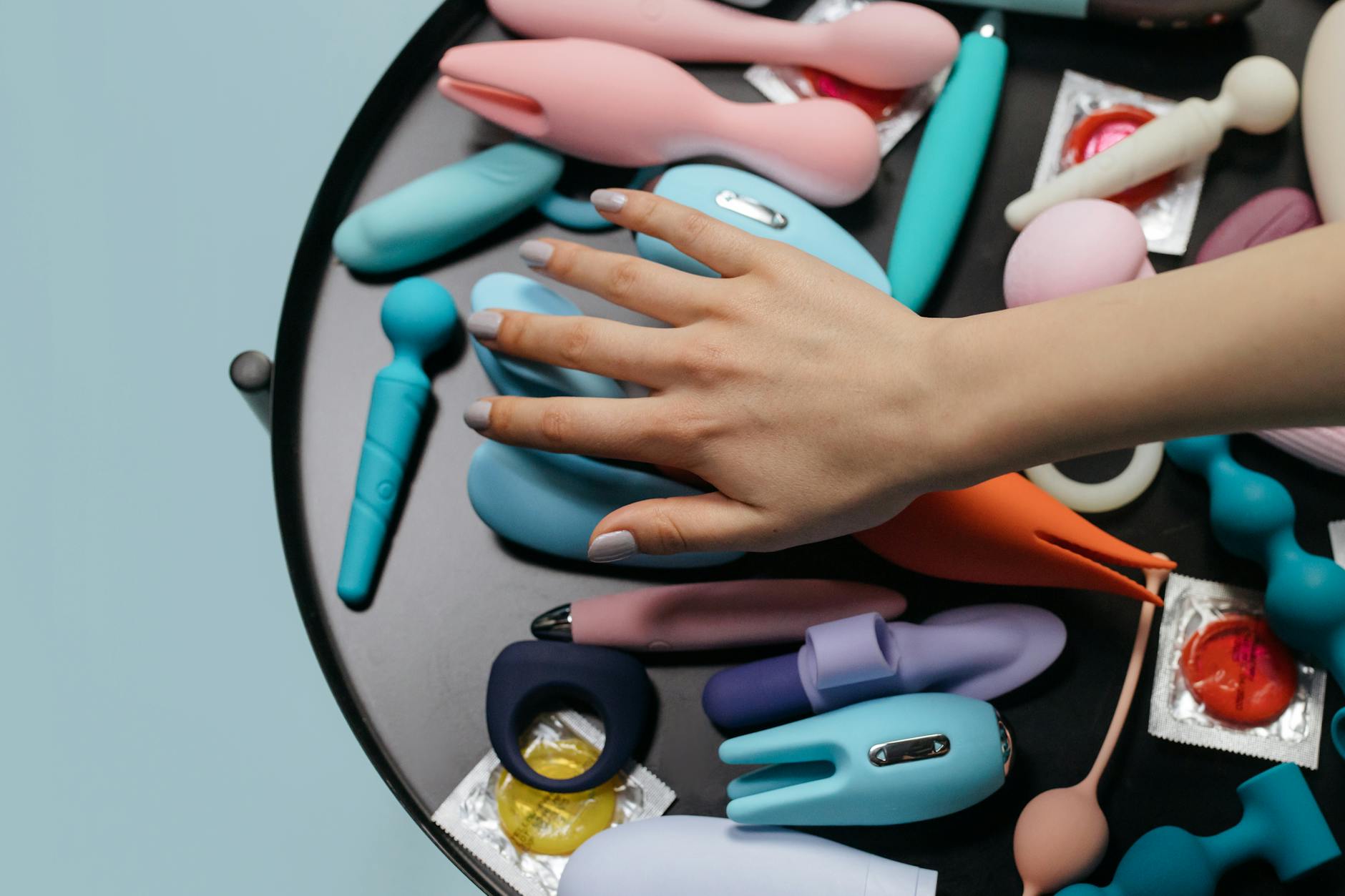
Here's the thing about sex after a long-term relationship ends
Your body doesn't automatically reset to "single mode." Years of being attuned to one person's rhythm, preferences, and timing live in your nervous system. When that person is gone, pleasure often disappears with them. Not because you're broken or lost desire, but because the entire context that shaped your sexuality just vanished.
Then a new partner appears. And suddenly you're navigating intimacy as a completely different version of yourself. You might feel rusty, self-conscious, or disconnected from your own body. This is normal. And it's exactly where lemon clitoral vibrators can help you find your way back.
Why this transition hits differently
After years with one person, your arousal response becomes wired to their specific touch, their timing, their energy. Long-term partners develop what therapists call "sexual choreography." You know the steps. Your body knows what comes next. When that partner leaves, you lose the script.
That's different from starting fresh with a brand-new person while still relatively confident in yourself. Here, you're renegotiating pleasure AND rebuilding your sense of your own sexuality at the same time. You might be wondering: Do I still respond the way I used to? What does my body actually want now? Can I trust my own signals?
The answer to all three is yes. But getting there requires some intentional reconnection with yourself. This is where a lemon vibrator becomes less of a sex toy and more of a bridging tool.
Solo pleasure as a reset button
Honestly, solo exploration with a clitoral vibrator is one of the most honest conversations you can have with your body right now. No one is watching. No one's timing matters. No one's needs are in the room except yours.
When you use a lemon vibrator alone, you're gathering data: What patterns feel good now? Which pressure intensity makes you actually relax instead of tense? How long does arousal actually take when there's zero pressure to perform? This information becomes your foundation.
Start in a comfortable, private space. No candles required. No music you think you "should" like. Just you, your body, and something that feels good. Many people discover that after a long-term relationship, their arousal response is completely different when they're not accommodating someone else's expectations. Some faster, some slower, some more textured. None of it is wrong.
What lemon vibrators offer you specifically
Clitoral vibrators like the ones from Official Lemon Vibrator offer something crucial during this transition: consistent, controllable stimulation that doesn't require partnering with another person's body.
You set the intensity. You set the rhythm. You pause when you want to pause. This matters because when you've spent years adapting to someone else's timing, having complete control over your own arousal can feel revelatory. You get to learn what your body wants without compromise.
Air-suction technology (like the lemon sucker design) offers another advantage: it stimulates through gentle suction rather than direct friction, which means it often feels softer and less jarring than traditional vibrators. After the emotional turbulence of a breakup, your nervous system might appreciate that softness.
Rebuilding confidence for partnered sex
Once you've spent time reconnecting with your own pleasure solo, partnered sex becomes less terrifying. You already know you can feel good. You already have proof that your body still responds. You're no longer walking into a new relationship blind about your own sexuality.
When you do move toward sex with a new partner, you can actually communicate about what you've learned. "I need about fifteen minutes of warm-up time." "I like clitoral stimulation that feels more indirect." "I want to explore my own pleasure alongside yours rather than always adapting to yours."
That's not pressure. That's information. And it changes everything about how the relationship develops.
The emotional piece matters as much as the physical one
Let's be clear: you might be using a lemon vibrator and feel nothing. Completely numb. Emotionally present but sensorially absent. This is normal grief. Pleasure doesn't exist in a vacuum. If you're processing loss, anger, or even just the strange identity shift of leaving a long-term relationship, your body knows that.
Sensation often returns in waves. You might have one amazing solo session where everything feels electric, then nothing for three weeks. That's your nervous system recalibrating. Not a sign that something's wrong.
If numbness persists beyond three to four months, talk to a therapist or your doctor. Sometimes pleasure flatness signals depression that needs clinical support. There's no shame in that. Getting help is actually the smartest form of self-care.
When a new partner enters the picture
Here's where many people get confused. You might want to introduce your lemon vibrator into partnered sex right away because you've been having great solo sessions. Slow down. That's worth discussing first.
Some new partners feel threatened by toys. Some are thrilled. Most are somewhere in the middle. The conversation matters more than the toy. "I've been reconnecting with my own pleasure and I'm learning what my body responds to. I'd love to explore that together. Would you want to try this?" is very different from springing a vibrator on someone mid-foreplay.
Pace it. Let partnered sex exist without the vibrator for a bit. Build trust and physical familiarity. Then, when it feels natural, introduce it as a plus sign, not a replacement.
What you're actually building
This transition period isn't just about sex. It's about reclaiming your body as yours. For years, your pleasure was relational. You were partly performing, partly accommodating, partly authentically aroused. Now you get to discover what authentic arousal actually feels like when it's just for you.
A lemon vibrator isn't magic. It won't erase grief or fast-track your healing. But it's a tool that says: "Your pleasure still matters. Your body still deserves attention. You're still worthy of feeling good."
That messaging, repeated regularly, does something real to your nervous system. You stop seeing pleasure as relational currency and start seeing it as part of your own self-care. That shift alone changes everything about how you approach new relationships.
People also ask
How long after a breakup should I wait before exploring pleasure again?
There's no magic number. Some people are ready in weeks. Others need months. What matters is that you're exploring because you want to, not because you think you should. If the idea of touching your own body still feels painful or wrong, you're not ready yet. That's fine. When curiosity returns, explore then. Pressure just creates more disconnection from your body.
Will using a lemon vibrator make it harder to enjoy sex with a new partner?
No. Actually the opposite. When you know your own pleasure response, partnered sex often becomes better because you can communicate about what feels good instead of just hoping your new partner guesses correctly. A clitoral vibrator teaches you about your own body so you can advocate for yourself with partners.
What if I feel guilty using a vibrator after my long-term relationship ended?
Guilt is often just grief wearing a different mask. You might feel like you're "moving on too fast" or "not honoring what you lost" by experiencing pleasure. But your body needing pleasure isn't disrespect to your previous relationship. It's just your body being human. Permission to feel good and sadness can coexist. They're not mutually exclusive.
Can my new partner and I use a lemon clitoral vibrator together on our first intimate experience?
Generally, no. First sex with a new partner involves enough newness already. Solo exploration with a vibrator, partnered sex without one, then a conversation about adding toys once you've built some physical familiarity. Rushing tools can make vulnerability harder. Slow is actually faster.
How do I talk to a new partner about the fact that I've been using vibrators solo since my breakup?
You don't have to, unless you want to. Solo pleasure is private. If you're introducing a vibrator into partnered sex, you can simply say: "I'd like to try this together." No elaborate history required. New partners don't need the full narrative of your healing. They need to know what you want going forward.
What if pleasure still feels disconnected even with a lemon vibrator?
That's worth taking seriously. Disconnection from pleasure after a major relationship transition can signal that your nervous system is still in protective mode. Consider talking to a therapist who specializes in relationship transitions or somatic work. Sometimes our bodies need more than a toy. They need permission, safety, and time to reorganize. Get that first, and pleasure usually follows.
The bottom line
Transitioning between partners means renegotiating your entire relationship with your own body. A lemon vibrator can be part of that renegotiation. It gives you back control when everything else has felt out of control. It lets you learn about your own pleasure without performance pressure. And it sends a message to your nervous system that you still deserve to feel good.
That matters. Not as a stepping stone to partnered sex, but as an actual, standalone act of self-respect. Your pleasure is yours to claim.
If you'd like to talk through any of this with someone trained in relationship transitions and pleasure, reach out. I'm here to help.