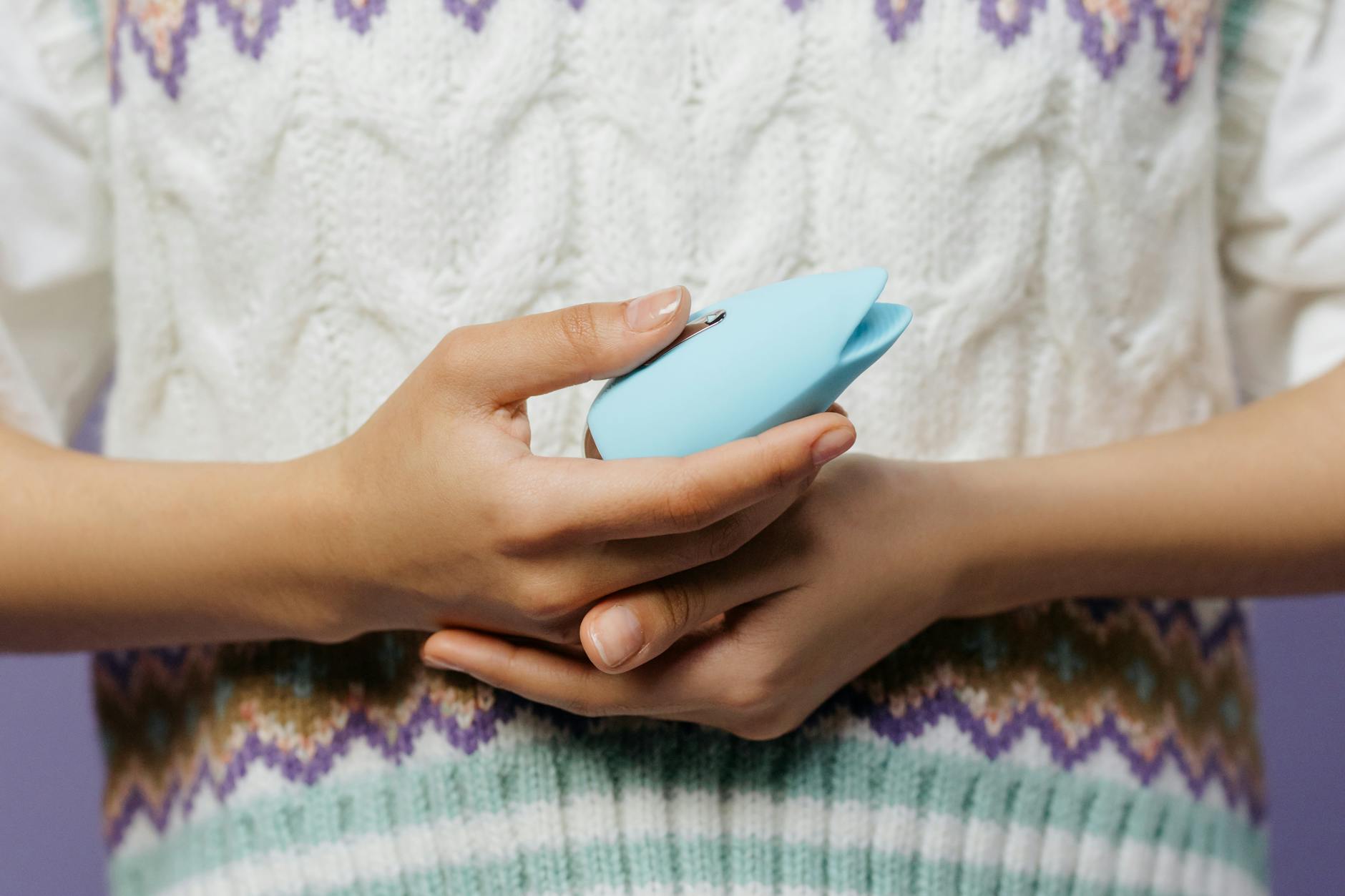
Here's what nobody tells you about desire and arousal
You can want something badly and still feel nothing physically. This sounds like a paradox until it happens to you, and then it feels like a betrayal. Your mind is saying "yes, absolutely," but your genitals are acting like they didn't get the memo. The disconnect is common, frustrating, and fixable. It's also not something that requires shame or a trip to a specialist. It usually just needs a tool that understands the problem.
Most of us were taught that arousal is automatic. Want equals arousal equals satisfaction. But the nervous system is messier than that. Mental desire and physiological arousal operate on different timelines and respond to different triggers. When they fall out of sync, the easiest fix is something mechanical and responsive: a lemon clitoral vibrator works here because it doesn't ask your body to catch up. It gives you a head start.
The physiology of the desire-arousal gap
Desire is mostly mental. It's the thought, the anticipation, the decision to have sex. Arousal is mostly physical. It's blood flow, lubrication, muscle relaxation, and nerve activation. They're connected but not dependent on each other.
When they split apart, it usually means one of three things is happening. First, your nervous system is stuck in sympathetic mode (fight-or-flight) because of stress, work anxiety, or relationship tension. Your brain wants sex, but your body is braced for danger. Second, you're not getting enough direct stimulation to trigger the physical cascade. Foreplay that worked at 25 doesn't work at 45, and pretending otherwise wastes everyone's time. Third, there's a lag built into your biology that nobody mentioned. Some people's bodies need 10-15 minutes just to warm up before anything registers.
For most couples, the gap appears when life gets full. Kids, jobs, aging parents, financial stress. The mental part of sexuality gets permission (you decide you want this), but the body doesn't get the actual physical input it needs to respond. That's where clitoral vibrators enter the picture.
Why lemon vibrators specifically bridge this gap
A lem vibrator works differently than a hand, a partner's touch, or your own attempts at stimulation. The key is consistent, targeted pressure that doesn't require your body to interpret subtle signals. Your clitoris has 8,000 nerve endings. A vibrator speaks directly to them without the negotiation that manual stimulation requires.
Lemon sexual toys, especially suction-based designs, create sustained stimulation that your nervous system recognizes immediately. Within 30 seconds to 2 minutes, your body usually shifts from "nothing's happening" to measurable physical response. Blood flow increases. Lubrication starts. The pelvic floor stops bracing for impact. You've moved from desire without arousal into actual arousal. The mental and physical sides finally sync.
This isn't a workaround for bad communication or missing connection. It's a tool for a specific, physical problem. If the gap is happening in a relationship, you can use it solo first to understand what works for you, then bring that knowledge into partnered sex.
The practical setup that works
Timing matters. Don't wait until you're already attempting sex and frustrated. Start earlier in the day when you're thinking about connection but haven't committed to a specific moment yet. This takes pressure off and lets your body actually catch up.
When you're ready, give yourself 10-15 minutes of privacy. Turn off notifications. Lie down or sit in a position where you're comfortable and supported. Start with the lowest setting on the lemon vibrator. Even if your mind is screaming "go harder," your body often needs the gentler beginning to recognize what's happening.
Place it directly on the clitoris, slightly to one side (not directly on top, which can feel numb-inducing after a few minutes). Leave it there without moving it around. Let the vibration do the work. Your instinct might be to rush, but patience here actually shortcuts the entire process. You're giving your nervous system permission to shift gears.
Within 2-5 minutes, you'll likely feel a change. Sensation increases. Thoughts get quieter. The gap starts closing. This is the moment where you can decide what happens next. You can continue solo. You can bring a partner in. You can set the vibrator aside and see if manual stimulation feels different now that your body is actually awake.
What to do if initial arousal takes 10-20 minutes
This is normal and doesn't mean you're broken. Some people's nervous systems require longer ramp-up time, especially if stress is high or if medication is involved. The lemon clitoral vibrator still shortens that timeline, but it won't turn 20 minutes into 2.
If this is your rhythm, use the tool as part of a longer foreplay conversation. Maybe you use the lemon vibrator while a partner touches you elsewhere, or while you're both talking and laughing. The vibrator isn't the only thing happening. It's the anchor that gives your body permission to respond while everything else is also happening.
Alternatively, use it on its own without a partner present. Some people find that the disconnect between desire and arousal gets worse when they're monitoring a partner's experience. Taking the performance pressure off by using a lemon sexual toy alone first can reset the entire pattern.
The mental side of closing the gap
Once the physical arousal starts, the mental piece usually follows. This is backwards from what most people believe. They think desire has to come first. But often, physical pleasure creates desire, not the other way around.
If your mind is still somewhere else while your body is responding, that's information. It usually means something else is in the way. Resentment, anxiety, or distraction that isn't primarily sexual. A lemon vibrator can't fix relationship conflict or clinical depression. What it can do is show you the difference between "I want this but my body won't cooperate" and "something deeper is wrong here."
When you experience actual arousal via a tool, you know what to look for in partnered situations. You can recognize the gap when it happens. And you can advocate for what you need. "I need 15 minutes of direct clitoral stimulation before anything else feels good." That's not a demand. That's information your body is giving you.
Common stumbling blocks and what to do
If it's not working within 5 minutes, check three things. First, battery level. A weakening vibration won't trigger the same response. Second, pressure and angle. Move the vibrator slightly until something feels different. Not necessarily better. Different. Your clitoris might be positioned slightly off-center from where you expect. Third, mental noise. If you're checking whether it's working, it won't. Put your phone away, look at something that relaxes you, or close your eyes. Your nervous system has to believe it's safe to respond.
If numbness happens, you're probably holding it in one spot too long on the highest setting. Drop the intensity and move the vibrator every 90 seconds. Some people also benefit from a small break (30 seconds) every few minutes. This keeps sensation acute instead of dull.
If you're still not feeling anything after 10-15 minutes, this might not be your arousal issue. Check whether the gap is really about physical response time, or whether stress, medication, or relationship dynamics are the actual problem. A tool helps a logistics problem. It doesn't fix a systems problem.
Bringing the vibrator into partnered sex
If you want to use a lemon vibrator with a partner, start the conversation before you're trying to have sex. Say what you've learned: "My body needs 10-15 minutes to warm up. I want to try using a vibrator during foreplay so that we're on the same page by the time we get there."
Then do it. Have your partner inside the room, touching you elsewhere, or just present. The vibrator isn't replacing them. It's solving a timing problem so you can actually enjoy what they're offering. Most partners are relieved when they understand the gap has nothing to do with their desirability.
For penetrative sex after, some people keep the lemon vibrator going during penetration. Others use it to reach full arousal, then set it aside. Both work. The point is that you've now shifted the dynamic from "I'm trying to catch up" to "we're both here and ready."
Why this matters long-term
The desire-arousal gap often grows worse the longer you ignore it. Not because it's getting worse, but because you start avoiding sex altogether to dodge the frustration. That avoidance becomes a pattern. The pattern becomes resentment or distance. Addressing it early, with something as simple as a lemon clitoral vibrator, stops that spiral before it starts.
Using lemon sexual toys also teaches your body that arousal is a skill you can activate. It's not something that either happens or doesn't. It's a system that responds to the right input. That knowledge alone changes how you approach sexuality. You stop waiting for spontaneous desire and start being intentional about creating conditions where your body can respond.
Frequently asked questions
How long should I use the vibrator before trying partnered sex?
Until you feel genuinely aroused. For most people, that's 5-10 minutes. You're looking for obvious physical signs: lubrication, clitoral engorgement, relaxation in your face and shoulders. Don't time it. Feel it.
Can I use a lemon vibrator if I'm on antidepressants that lower libido?
Yes. Antidepressants often create the exact gap you're experiencing. The vibrator can help bridge the physical side even if the mental desire piece is muted. If you're interested in exploring whether your medication is the right fit, a conversation with your doctor about the desire side is separate from using tools for the arousal side. Both can happen at the same time.
Does using a vibrator make partnered sex less satisfying?
Not typically. Most people report that using a vibrator to reach arousal actually improves partnered sex because they're showing up fully present instead of distracted by frustration. A lem vibrator is a warmup tool, not a replacement.
What if my partner feels threatened by using a vibrator?
That's worth addressing before you bring the vibrator in. The insecurity usually isn't about the tool. It's about fear that something is wrong with them or the relationship. Share what you've learned: your body needs different input than a partner can provide. You can also try using it solo first and not mentioning it until you're comfortable talking about how it helps.
Should I use the vibrator every time, or only when I'm stuck?
Try it every time for two weeks. This isn't about dependence. It's about teaching your nervous system a new pattern. Once your body recognizes the cue, you might find that manual stimulation works better because your nervous system has been reset. Then use the vibrator only when you need it.
Is there a connection between desire-arousal gap and hormonal birth control?
Yes. Hormonal contraception affects desire in some people and arousal response in others. If the gap started after you began a new method, a conversation with your gynecologist about alternatives is worth having. A vibrator can help in the meantime, but it's not solving the root cause if hormones are the issue.
The bottom line
Desire without arousal isn't a personal failing. It's a mismatch between your mental and physical systems. A lemon vibrator recognizes this mismatch and gives your body a direct route to response. It works because it bypasses negotiation and speaks directly to nerve endings that are ready to wake up. Once your physical and mental sides sync, sex becomes something you're fully in, not something you're trying to catch up to. That changes everything.