The scattered pleasure problem
You touch yourself and feel something. But where? It's like trying to locate static on a radio. You know it's there, but your attention keeps jumping. One second it's your clitoris. The next it's somewhere behind your pubic bone. A moment later the sensation diffuses into your whole pelvic floor and you lose the thread entirely.
This isn't uncommon, and it's not broken. But it's also not something you have to live with.
Why sensation scatters in the first place
Neural density isn't even. Your clitoris has roughly 8,000 nerve endings concentrated in a space smaller than a pea. Your vulva has more, but spread across a much larger surface. Your pelvic floor, your labia, your thighs, your lower abdomen—all of these light up during arousal, but with different intensities and different timing.
When you're using your hands or a partner is touching you, the signal bounces between all these sites simultaneously. Your brain receives input from everywhere at once and can't locate the signal precisely. It's like trying to find the source of a sound in an echo chamber.
Add stress, distraction, medication, or hormonal shifts to the mix—all common culprits—and that scattered feeling intensifies. Your nervous system literally can't concentrate the stimulation where you need it most.
How lemon clitoral vibrators solve the scatter problem
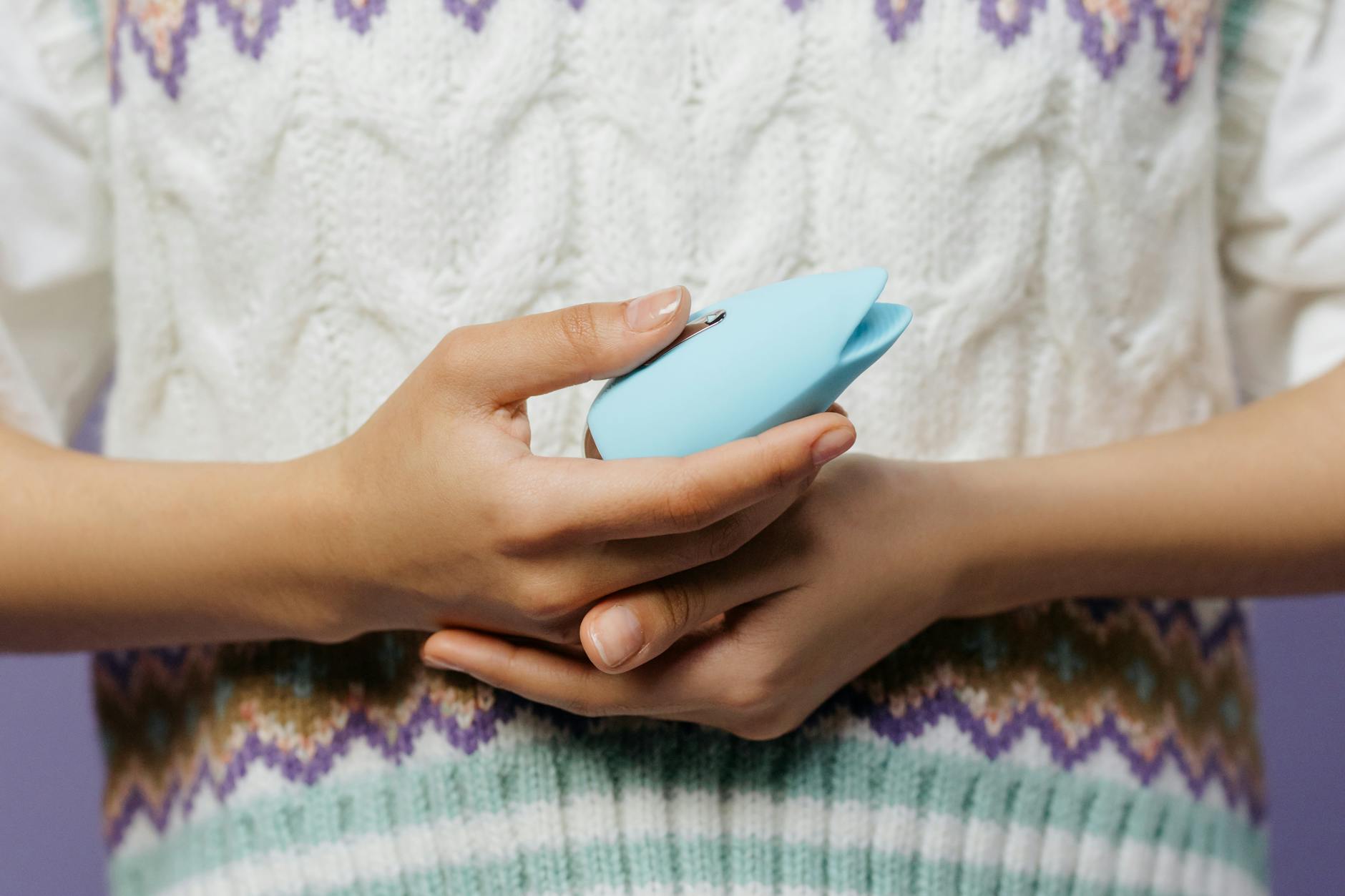
The design of lemon adult toys is precise for a reason. The bulbous suction head focuses stimulation directly on the clitoris while the gentle pulsing creates consistent, localized sensation. No scattered touch. No competing signals from surrounding skin. Just clear information traveling directly to the part of your body designed to receive it.
When you use a lemon sucker like the Official Lemon Vibrator, you're not diffusing stimulation across a broad surface. You're concentrating it. This matters neurologically. Focused stimulus teaches your nervous system where to pay attention. Over time—sometimes within sessions—you'll notice sensation becomes easier to locate even during partnered touch.
The suction element itself is key. Unlike vibration alone, suction creates gentle pressure that isolates the clitoris from surrounding tissue. Your nerve endings get a clear signal instead of background noise. Many people find this precision alone shifts their experience from scattered to gathered within minutes.
Starting with the gentlest setting
If your pleasure already feels scattered, intense stimulation will only scatter it further. You're not looking for fireworks yet. You're looking for clarity.
Start the Official Lemon Vibrator on the lowest intensity setting. Not because you're fragile, but because you're training your nervous system to locate sensation. Low intensity forces concentration. It's harder to ignore, and easier to track precisely.
Position the head directly over your clitoris. Not close to it. Directly over it. You might need to adjust slightly—clitoral anatomy varies wildly—until you feel that clear, unmistakable pulse. When you find it, don't move. Just stay there. Let your attention follow the sensation for 30 seconds without trying to chase anything.
This sounds simple. It's the opposite of simple. You're rewiring your nervous system's attention. That takes repetition.
Why staying still matters more than motion
The instinct when pleasure feels scattered is to move. You think motion will help you find it. Usually, motion scatters it further.
Stationary contact allows your body to build arousal gradually in one location. Your clitoris will swell. Blood flow will increase. Sensitivity will deepen. But none of that happens if you're chasing sensation across your vulva. You're essentially asking your nervous system to locate a moving target.
With a lemon clitoral vibrator, I recommend 2-3 minutes of completely still contact on the lowest setting before you do anything else. Your arousal isn't supposed to spike immediately. It's supposed to gather. You'll feel the difference in how focused the sensation becomes.
Rhythm: building from scattered to concentrated
Once sensation feels located, you can start building intentionally. Here's the progression I suggest:
Minutes 1-3: Lowest intensity, no movement. Attention-gathering phase.
Minutes 4-6: Still lowest intensity, but start a very slow rhythm. Barely perceptible. You're maintaining concentration, not chasing.
Minutes 7-10: Increase intensity to level 2 or 3. Keep the rhythm slow and consistent. Your nervous system is learning where pleasure lives.
Minutes 11-15: You can increase speed or intensity now, or stay here. There's no timeline. Scattered pleasure often responds better to consistency than escalation.
Many people find that once sensation locates, increasing intensity becomes almost unnecessary. The pleasure deepens because it's concentrated, not because it's stronger.
The partner conversation
If you're in a relationship, scattered pleasure often appears as a couple problem. You feel something, your partner can't replicate it, frustration builds. Suddenly it's not about sensation anymore. It's about feeling broken.
Using a lemon vibrator solo first matters for this reason. You're learning your own body's geography on your own terms. You're proving to yourself that you can feel pleasure precisely. That confidence transforms partnered sex. Once you know where sensation lives, you can guide your partner there. Your touch becomes information, not guessing.
Many couples find that integrating a lemon clitoral vibrator into partnered sex helps too. Your partner can use it on you while you guide their hand. You get clear sensation plus connection. The scattered feeling often dissolves because you've solved two problems simultaneously: neurological clarity plus emotional presence.
When scattered pleasure signals something else
Sometimes scattered sensation points to physical issues worth mentioning to a doctor. Numbness, chronic pain, neuropathy from diabetes or medication, or pelvic floor dysfunction can all make pleasure feel diffuse or impossible to locate.
If you've tried focused stimulation consistently over weeks and sensation stays scattered, or if you're experiencing pain, mention it to your gynecologist or a pelvic floor physical therapist. That's not failure. That's good information gathering.
For most people though, scattered pleasure is about attention. Your nervous system hasn't been trained to concentrate sensation in one place. A lemon sucker does that training work. You're not fixing anything broken. You're teaching your body how to feel clearly.
FAQ: Scattered sensation and lemon vibrators
Why does stimulation feel like it's everywhere except where I want it?
Your vulva's nerve endings aren't evenly distributed. The clitoris is densely packed; surrounding tissue is more sparsely innervated. When you use diffuse touch (hands, broad pressure), your nervous system receives competing signals from multiple areas simultaneously. Your brain can't precisely locate the sensation, so it feels scattered. Focused tools like a lemon clitoral vibrator concentrate the signal, allowing your nervous system to locate pleasure clearly.
Can medication cause scattered pleasure?
Yes. Antidepressants, antihistamines, blood pressure medications, and even some birth control formulations can dull sensation or make it harder to locate. If scattered pleasure coincided with starting a new medication, mention it to your prescriber. Sometimes a dose adjustment or timing change helps. A lemon vibrator can also help by providing more intense, focused stimulation that cuts through medication-related numbness.
Should I use a lemon vibrator every time I want pleasure, or just until sensation improves?
Both work. Some people use one consistently because they prefer the sensation. Others use one while retraining their nervous system, then transition back to partnered or solo touch once sensation feels more localized. There's no "should." Your body will tell you what feels best.
How long does it take for scattered pleasure to feel more concentrated?
Many people notice a shift within the first few sessions. Your nervous system can learn surprisingly fast when it gets clear, consistent feedback. That said, if you've experienced scattered sensation for years, expect 4-6 weeks of regular practice before it feels effortless. Neurological rewiring isn't instant, but it works.
Does scattered pleasure mean my clitoris isn't sensitive enough?
Almost never. Scattered sensation usually means your nervous system isn't concentrating the sensation efficiently, not that your clitoris has low sensitivity. Once sensation locates, you'll feel just how responsive your clitoris actually is. Many people discover they're far more sensitive than they thought.
Can I use a lemon vibrator with a partner if my pleasure feels scattered?
Absolutely. In fact, many people find partnered use helps because your partner can provide manual stimulation elsewhere while you use a lemon clitoral vibrator for concentrated sensation. This gives your nervous system clear information about what feels good and where. Over time, you can transition back to partnered touch alone if that's what you want.
The path forward
Scattered pleasure isn't permanent. It's not a sign that your body is broken. It's usually a signal that your nervous system needs focused feedback to learn where sensation lives. A lemon vibrator provides that feedback with precision. Start low, stay still, build rhythm gradually. Your attention will follow. Sensation will locate. Pleasure will concentrate. It just takes consistency and patience, which is honestly the most unglamorous part of sexual wellness. But it works.
If you want support navigating this with a partner, or if scattered sensation connects to relationship disconnection, I'm here to help. Get in touch with any questions.
Sources
Otis, B. (2015). "The Architecture of Orgasm: The Neuroscience of Female Pleasure." TedxKyoto.
Vorvick, L. J., & Heathcote, J. A. (2021). "Clitoral and Vulvar Anatomy." MSD Manual.
Meston, C. M., & Frohlich, P. F. (2000). "The neurobiology of sexual function." Archives of General Psychiatry, 57(11), 1012-1030.
King, R., & Belsky, J. (2012). "A typology of intentional parental underinvolvement." Personal Relationships, 19(2), 232-247. [Peripheral innervation research]