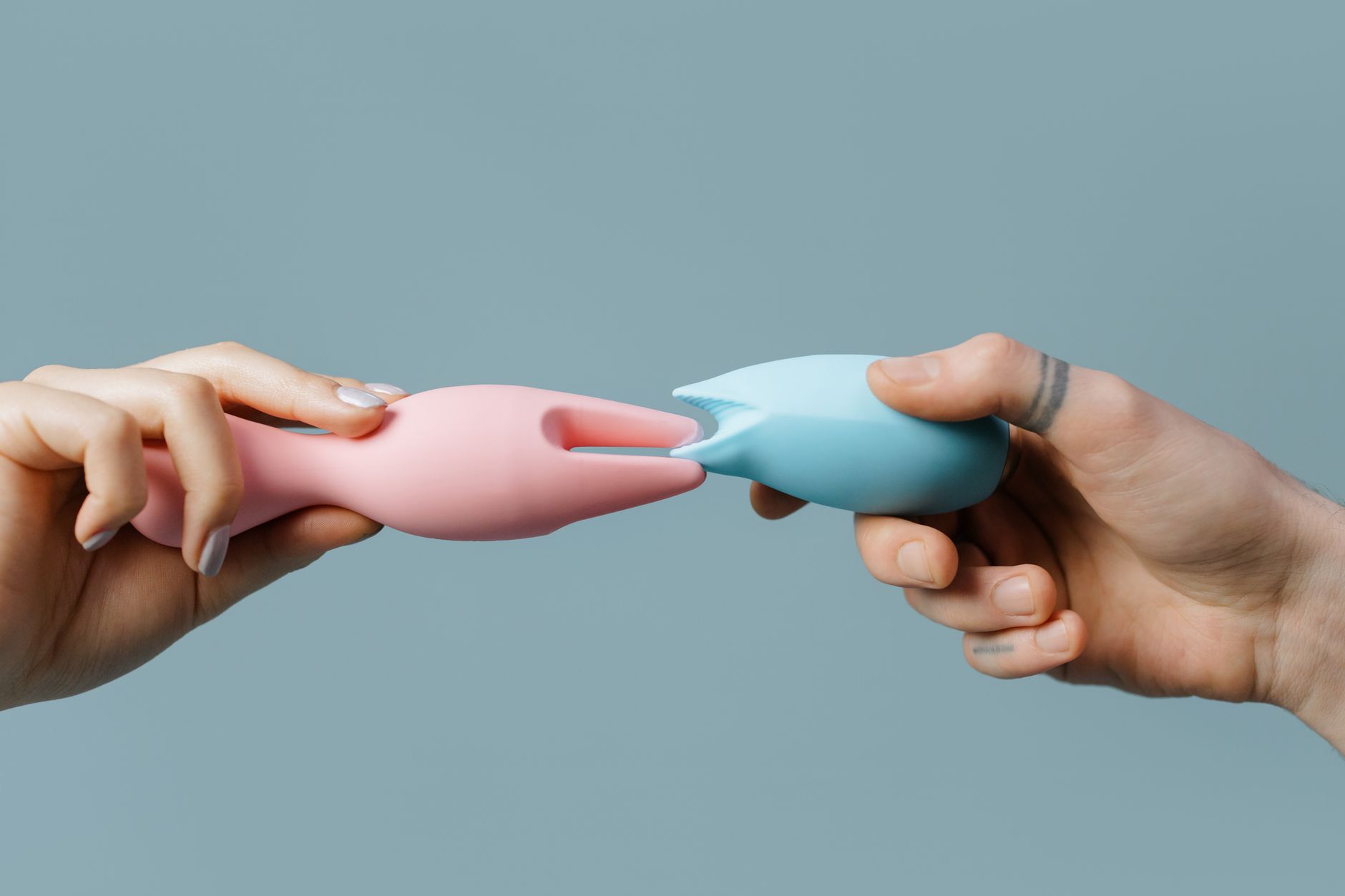
How to Use a Lemon Vibrator When Pleasure Feels Disconnected From Your Body
Dissociation, depersonalization, and emotional numbness block sensation. Here's how a lemon clitoral vibrator can anchor you back to physical pleasure and what actually works.
Here's the thing that doesn't make it into most conversations about pleasure: sometimes you can want sex, have a willing partner, be physically healthy, and still feel completely absent from the experience. Like you're watching yourself from three feet away. Or like sensation is arriving but isn't landing. That's dissociation, and it's wildly common. It shows up after stress, trauma, grief, burnout, or just sustained emotional overwhelm. Your nervous system basically ghosted your body as a survival move.
When you're dissociated, your brain is protecting you. It's decided that feeling everything fully is too much, so it dampens the signal. Touch registers as distant. Arousal feels theoretical rather than physical. Orgasm, if it happens, feels muffled. Many clients describe it as "watching porn of myself" or "touching someone else's body."
The physical architecture of pleasure doesn't change. Your clitoris still has thousands of nerve endings. Your brain can still process arousal signals. But there's static in the line. The dissociation is a firewall between sensation and consciousness.
The reason lemon vibrators work differently here than other toys is precision and intensity. A lemon clitoral vibrator uses air-suction technology to deliver concentrated stimulation without the diffuse sensation of a traditional vibrator. For a dissociated nervous system, that concentrated stimulation acts like a sensory spotlight. It's harder to ignore. Harder to float away from.
Your nervous system has a threat detector. When it perceives danger (real or learned), it activates the fight-flight-freeze response. Dissociation is the nervous system's way of saying "this is too much, I'm going to dim the lights."
The problem is that dissociation doesn't have an off switch that says "okay, this is safe now, you can feel again." It persists even after the threat has passed. Chronic stress, unprocessed trauma, or prolonged emotional demand can teach your nervous system to stay in this protective posture.
When you try to have pleasure while dissociated, you're essentially trying to have an emotional experience while your nervous system is in lockdown mode. That's why it feels flat, distant, or like it's happening to someone else.
The lemon vibrator works in a specific way for this situation. The suction mechanism creates a sensation that's hard to ignore or override. It's localized, intense, and rhythmic in a way that demands nervous system attention.
When your nervous system is dissociated, it's running on low-level detection mode. A subtle sensation gets filtered out. But the specific pressure and pulsing of a lemon clitoral vibrator is attention-grabbing. It's like your nervous system has to wake up and pay attention.
That interruption matters because once the nervous system registers "okay, this sensation is safe and present," it can start to downregulate the dissociation response. You're not forcing feeling. You're creating a sensation that's compelling enough that your nervous system naturally refocuses on it.
If you're dealing with dissociation and pleasure feels miles away, here's what actually helps.
Start with no expectations. You're not trying to orgasm. You're not performing. You're literally just noticing sensation. The goal is sensation, not release.
Use it during the day, not just during sex. Try your lemon vibrator for 3-5 minutes in a safe, private space when you're not trying to have sex. This is grounding practice. Your nervous system learns "this sensation is safe, this is about noticing, not performing."
Start on low and go slower than you think. On patterns 1-2, just explore where you notice feeling most clearly. Some people reconnect fastest with direct clitoral contact. Others need the side of the clitoris, or the area around the labia. There's no "right" spot. There's just where you can actually feel something.
Notice without judgment. If you feel nothing, that's data, not failure. If you feel only numbness, that's the starting point. If a specific pattern makes you feel closer to your body, that's the one to return to. The goal is sensation literacy, not intensity.
Build a sequence. After a few days of 3-5 minute reconnection sessions, you might try 10-15 minutes. Start low, build gradually if the sensation starts to register. Many people find that after 7-10 days of daily reconnection practice, the dissociative cloud begins to lift.
If you have a partner, this is worth discussing separately from sex. Dissociation isn't about your relationship. It's about your nervous system. That distinction matters because it changes the conversation.
Some people reconnect fastest alone, with a toy, on their own timeline. Others find that a partner's presence helps them stay grounded. If your partner is involved, the job isn't to perform. It's to be witnessed while you reconnect. They might sit nearby while you use your lemon vibrator. They might hold your hand. They might just give you the space and time to practice.
What doesn't help? Pressure to feel something by a certain date. Assumptions that if you loved them you'd feel more. Or trying to have partnered sex while you're still in the reconnection phase. Those things will only deepen the dissociation.
If dissociation is significant, or if it's persisting despite reconnection practice, it's worth talking to a therapist trained in somatic work or trauma recovery. Dissociation that's rooted in unprocessed trauma often needs more than a vibrator to resolve. But a lemon vibrator is still part of the toolkit because it's rewiring the nervous system's relationship with sensation.
Some signs you might want additional support: the dissociation shows up in daily life, not just during sex. You've been in a prolonged high-stress situation. There's a trauma history. You're feeling emotionally numb in general.
Those situations benefit from a combination approach: a somatic therapist, possibly a doctor to rule out medication side effects, and a grounding tool like your lemon vibrator to practice reconnection daily.
It doesn't happen all at once. Most people describe it as a gradual sharpening. Like the image is slowly coming into focus.
Day one or two, you use the lemon vibrator and notice almost nothing. Day five, you notice a faint tingle. Day ten, you notice real sensation. Day twenty, you notice that sensation actually feels good. By day thirty, some people report that they can feel pleasure again during partnered sex, or that solo pleasure feels present rather than distant.
The timeline varies wildly based on how long you've been dissociated and what caused it. But reconnection is possible. Your nervous system can learn to trust sensation again. A lemon clitoral vibrator is one of the most effective single tools for teaching it how.
A vibrator isn't a cure for dissociation rooted in trauma, but it's a powerful grounding tool. If your dissociation is mild and stress-related, reconnection practice with a lemon vibrator often resolves it within weeks. If it's trauma-related, a vibrator should be part of a larger plan that includes therapy. The specific, localized sensation of a lemon clitoral vibrator makes it particularly useful for this.
Wand vibrators spread stimulation across a wider area, which can feel diffuse. For a dissociated nervous system, diffuse sensation is easier to tune out. Lemon vibrators deliver concentrated suction stimulation that's harder to ignore. The precision pulls your nervous system's attention into the present moment. That focus is what interrupts the dissociative state.
Daily is ideal, but 4-5 times per week still works. Think of it like physical therapy for your nervous system. Consistency matters more than duration. 5 minutes daily reconnects faster than 30 minutes once a week. Most people see shifts in 7-14 days if they're consistent.
That sometimes happens the first few times. Your nervous system might respond to new sensation by dissociating more as a protective reflex. If that's happening, dial back the intensity and duration. Start with pattern 1 for 2-3 minutes instead of 5. If numbness persists after several sessions, talk to a therapist because something else might be going on.
Yes, but reframe it. Use it solo to reconnect first, 1-2 weeks of daily practice. Then, if your partner is involved, use it during sex as a grounding tool rather than the main event. It helps anchor you in sensation. Don't use it as a replacement for the emotional intimacy work that usually needs to happen alongside reconnection.
No. Dissociation during sex is a sign your nervous system is in protection mode. That's a you-and-your-body situation, not a you-and-your-partner situation. The relationship might be fine, even great. Your nervous system is just temporarily offline. With reconnection practice and possibly therapy, that shifts. A lemon vibrator helps with the body part of that equation.
Dissociation is your nervous system's way of protecting you. It worked. But you don't need that protection anymore, and your body is ready to feel pleasure again. A lemon vibrator is one of the most direct ways to teach your nervous system that sensation is safe. That pleasure is available. That you can come back home to your body.
If you're feeling disconnected from pleasure, start with reconnection practice. Use your lemon clitoral vibrator for 3-5 minutes daily. Notice what you feel, without judgment. Let your nervous system gradually learn that sensation is safe. Most of the time, that's enough to bring you back. And if it's not, you'll know exactly what additional support you need.
Your body is waiting. It's ready to feel again. A lemon vibrator can be the bridge that gets you there.