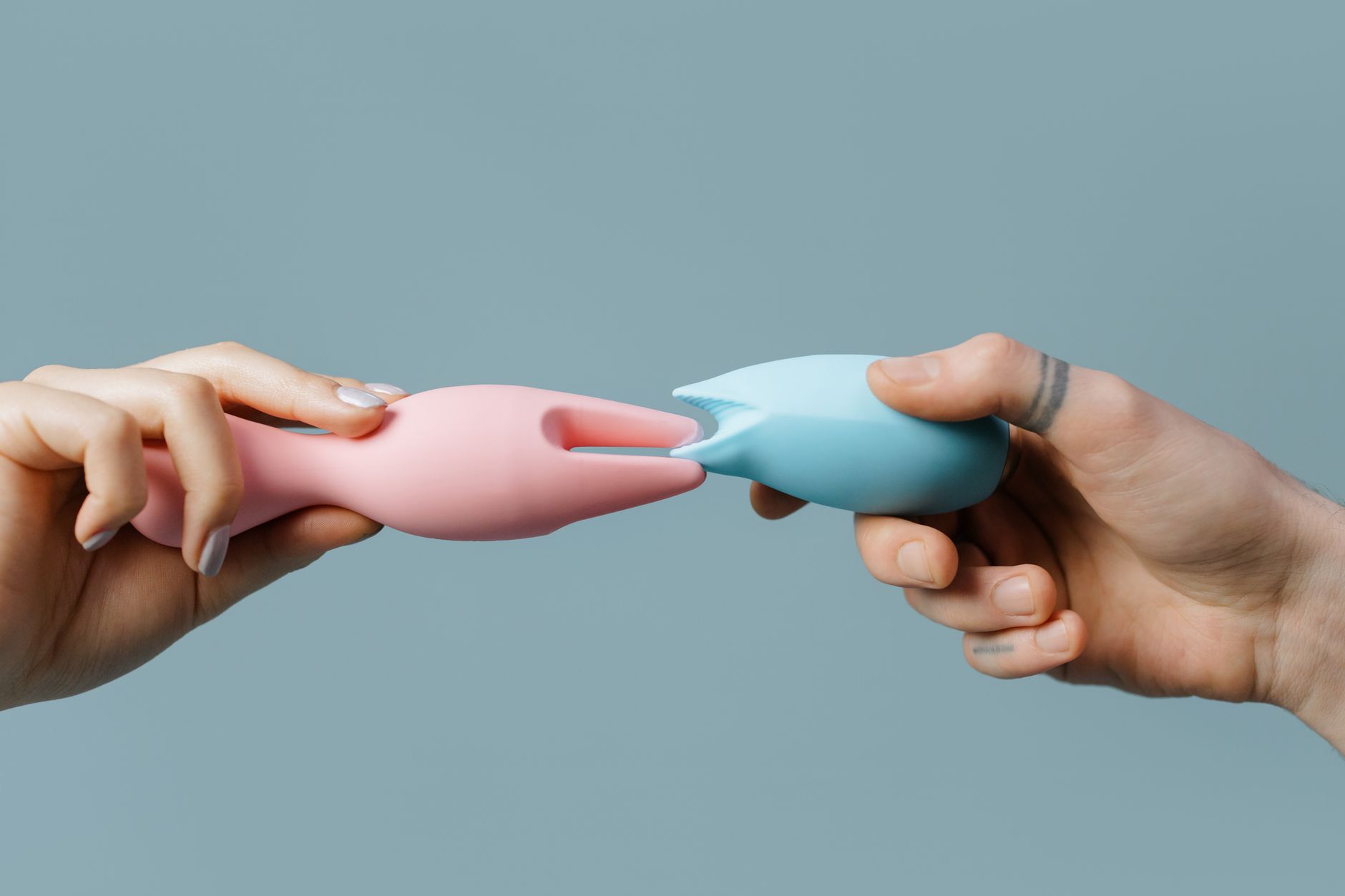
Let's name the thing no one talks about
Libido mismatches are one of the most common relationship complaints I hear, and also one of the most shame-filled. One partner wants sex twice a week. The other is fine with once a month. Neither is wrong. Both are frustrated. And then the lower-desire partner starts feeling guilty for "not being enough," while the higher-desire partner feels rejected, unattractive, or resentful. The sex that does happen becomes tense and obligatory. Sound familiar.
Here's what I know: a lemon clitoral vibrator won't fix a libido mismatch. But it can transform how you move through one. Used thoughtfully, it becomes a bridge instead of a dividing line.
Why this mismatch happens (and it's not what you think)
Most people assume desire differences come down to attraction. They don't. Libido is shaped by stress, sleep, hormones, work pressure, past experiences with sex, medication, depression, how connected you feel emotionally, whether you feel heard in the relationship, and a thousand other variables.
I've worked with couples where the lower-desire partner is deeply attracted to their partner but exhausted. Or the higher-desire partner feels unmet emotionally, so sex becomes an attempt to fill that void. Or one person had a bad sexual experience earlier in life and never fully healed. Or they're on an antidepressant that flattened their sex drive (which is real, treatable, and not permanent).
The point: don't assume your partner's lower libido is about you or about the relationship's future. It's almost always about something specific and addressable.
What actually happens when desire doesn't match
The pattern is predictable. The higher-desire partner initiates. The lower-desire partner declines (or says yes while clearly not wanting to). Both people feel bad. Over time, the higher-desire partner stops initiating altogether because rejection hurts. The lower-desire partner feels relief but also guilt. Connection slowly erodes. Sex becomes something to avoid instead of something that binds you.
After months or years, couples tell me they're living like roommates. They're not angry. They're just... done.
A lemon vibrator interrupts this cycle at a crucial point: it gives the higher-desire partner a way to meet their own needs without placing that burden on their partner. That sounds simple. It's actually radical.
How using a lemon vibrator alone changes the dynamic
When you use a lemon clitoral vibrator for your own pleasure instead of waiting for partnered sex, three things shift immediately.
First, the pressure lifts. Your partner doesn't have to perform. You're not waiting for them to be in the mood. You're not growing resentful. That's huge. Resentment is a relationship killer, and a simple tool that lets you step outside the cycle removes a major source of it.
Second, you actually feel satisfied. Higher-desire partners often stay in that state of chronic dissatisfaction because partnered sex isn't meeting their needs anyway. Maybe you need longer warm-up time. Maybe you need a specific kind of stimulation. Maybe your partner is tired and rushed, so the sex is perfunctory. A lemon sucker gives you what you actually want. Your body gets what it needs. That's not a consolation prize. It's full pleasure on your terms.
Third, paradoxically, this often improves partnered sex. When you're not desperate and resentful, you're more relaxed and fun to be around. When you're satisfied sexually, you're less likely to approach your partner with an underlying current of "you owe me this." The energy between you softens. And sometimes, when the pressure is off, the lower-desire partner actually becomes more interested in sex.
Using a lemon vibrator with your partner present
Solo use is important. But some couples find that partnered exploration works too.
The key is consent and communication. Before you bring a toy into the room, have a real conversation. Not while you're trying to have sex. Not when you're frustrated. When you're calm and clothed, say something like: "I've been thinking about trying a toy to help me feel good. I want to do this together sometimes, but also sometimes solo. I'm not asking you to do anything. Just be present if you want to be."
When you actually use it together, there's no script. Some partners love watching. Some hold the toy while you guide it. Some stay in the room doing their own thing while you use it. Some prefer to leave. All of those are fine. The point is removing shame and creating permission for your pleasure.
If your partner seems threatened by the toy, that's worth naming. Gently, in a separate conversation. "I noticed you seemed uncomfortable when we talked about the vibrator. Can you tell me what came up?" Often, lower-desire partners worry that a toy means their partner finds them inadequate. That's a real fear worth addressing directly. You might say: "I want this because I want to feel good. It has nothing to do with you not being enough."
The conversation you actually need to have
A lemon vibrator is a tool, not a therapy substitute. If there's a real mismatch in desire, the underlying causes matter.
Ask your partner what's actually happening. Is it stress. Is it resentment about something unrelated to sex. Are they depressed. Are they on medication that's affecting libido. Did something happen earlier in life that makes sex feel unsafe. Are they feeling unheard in the relationship.
Listen without defending. Then ask: "What would help. What do you actually need." Sometimes it's therapy. Sometimes it's adjusting work hours. Sometimes it's rebuilding emotional intimacy through non-sexual touch. Sometimes it's a medication change.
The vibrator handles one part of the equation (your pleasure). The conversation handles another (the actual reason for the mismatch). You need both.
When to know a desire mismatch is a real problem
Some mismatches are just normal variation. You want sex twice a week, they want it once. You compromise at 1.5 times. Life moves on.
Other mismatches are signs of something deeper: anger, disconnection, a health issue that needs treatment, or a fundamental incompatibility. If your partner's libido has dropped suddenly, that's worth investigating. If they're never interested in sex even when they're relaxed and there's no external stress, that's information. If they refuse to talk about it or get help, that's also information.
A lemon clitoral vibrator doesn't fix those problems. It just makes life more tolerable while you're trying to address them. If you've tried conversations, you've considered the root cause, and nothing is shifting, couples therapy is worth exploring.
How to actually bring this up without defensiveness
Frame it around pleasure, not rejection. "I want to explore using a toy to feel good" sounds different than "You're not meeting my needs." One is about you. The other is accusatory.
Choose a calm moment. Not when you're frustrated about sex. Not right before bed when you're both tired.
Bring it up with curiosity, not demands. "I've been thinking about trying a lemon vibrator. I'd like to hear what comes up for you about that" invites conversation. "I'm getting a toy" doesn't.
Be prepared to listen if your partner has fears or concerns. Don't dismiss them. Address them directly.
Making solo pleasure feel connected, not lonely
This is the part people skip, and it matters. If you're using a lemon vibrator while your partner is downstairs watching TV, that can feel isolating.
Some couples build a ritual around it. "Tuesday nights, I'm going to take time for myself. Want to get dinner started, and I'll be down in 20 minutes." That frames it as self-care, not rejection.
Others find that solo pleasure is actually more connected when they're honest about it. "I used the vibrator this morning and it felt great" is a vulnerable thing to say. It normalizes pleasure in your relationship instead of hiding it.
The goal is to remove secrecy without forcing intimacy where it doesn't exist. You're taking care of yourself. You're not asking your partner to perform. You're building a healthier sexual life for you both.
When desire starts shifting back
Sometimes, when the pressure lifts and both partners feel less resentful, desire does shift. The lower-desire partner becomes more interested. Or they're still lower-desire, but now it's a non-issue because both people's needs are being met.
Other times, nothing changes except the emotional tone. You're still mismatched, but you're not angry about it.
Both are wins. The vibrator's job isn't to force your partner to want more sex. It's to let you feel satisfied without that burden.
FAQ: Libido Mismatches and Lemon Vibrators
Will using a lemon vibrator make my partner less interested in sex with me?
Not if you frame it right. If you present the vibrator as a bridge ("this helps me feel good so I'm not waiting for you to want sex"), most partners respond well. If you present it as a replacement ("I don't need you anymore"), then yes, it might create defensiveness. Communicate clearly that solo pleasure and partnered sex are different things.
What if my partner feels threatened by the toy?
That's common and worth exploring. Ask what the threat is. Often it's worry that you find them inadequate, or that you'll prefer the toy, or that it means something is wrong with the relationship. Reassure them directly: "I want this for me, not against you." If the defensiveness persists, couples therapy can help you both process it.
Should I hide the vibrator, or be open about using it?
Open is almost always better. Hiding it creates shame and secrecy, which erodes intimacy. Even if your partner isn't interested in the toy itself, knowing you use it and being okay with it is healthier than discovering it by accident later.
Can a lemon vibrator fix a dead bedroom?
No. It can make your life more satisfying while you address the real issues, but it won't fix underlying disconnection, anger, or health problems. Use it as part of a bigger conversation, not instead of one.
What if my partner wants to use the vibrator with me, but I'm not sure about it?
That's fine. You can have different comfort levels. Maybe you use it solo most of the time, and occasionally with them present. Or maybe you never use it together. Clear boundaries actually make this easier.
How do I know if the desire mismatch is fixable?
It's fixable if both people are willing to understand what's driving it and address it. If one partner refuses to engage with the conversation, that's information. Some mismatches are due to stress or hormones and shift with time. Others are rooted in deeper incompatibility or unhealed trauma. A therapist can help you figure out which is which.
The real point
A lemon vibrator isn't a band-aid for a real problem. It's a tool that lets you feel good while you're doing the harder work of understanding your partner and yourself. Use it that way, and it becomes something that actually strengthens your relationship instead of replacing it.