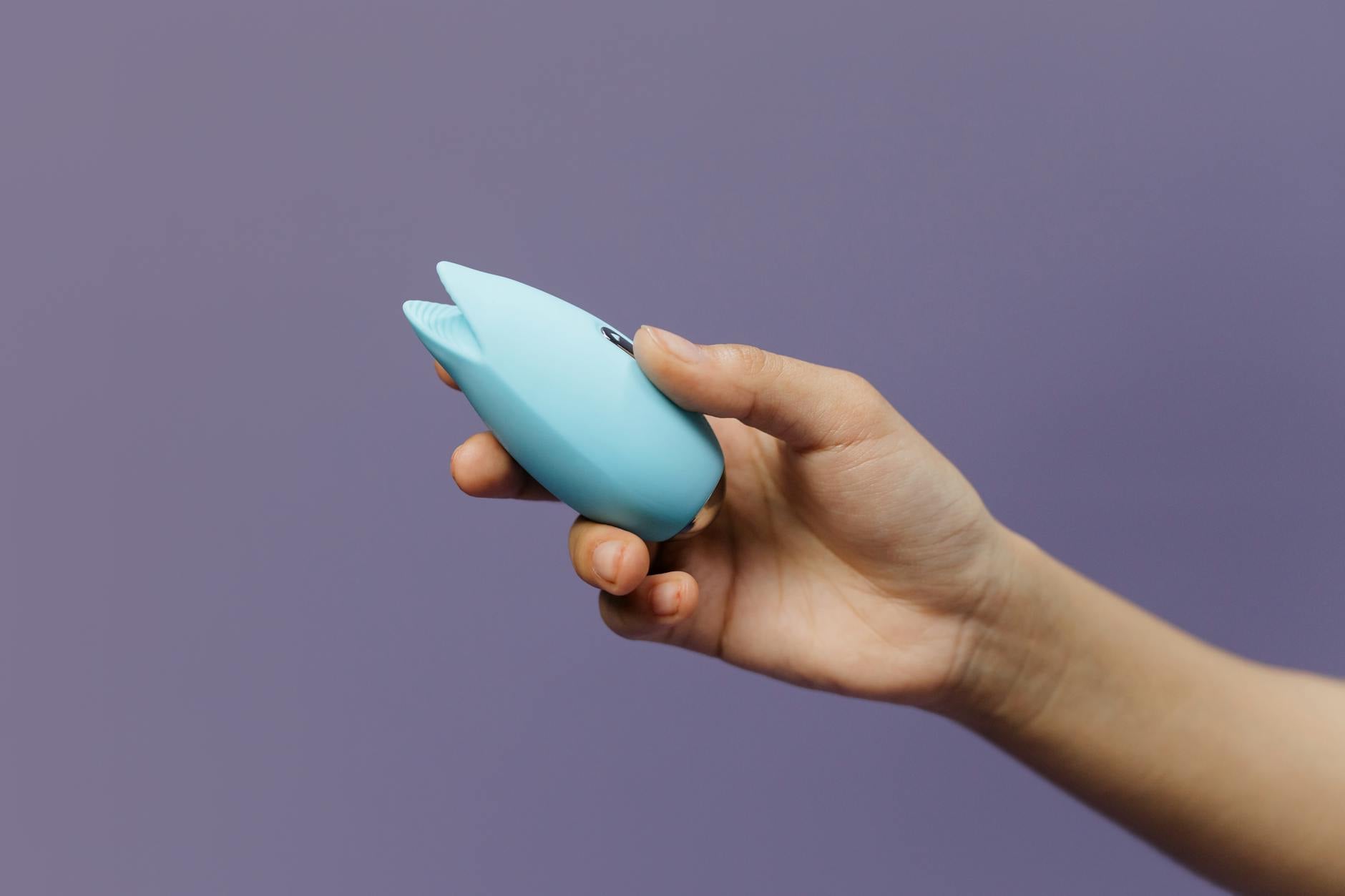
How to Use a Lemon Vibrator for Pleasure When Your Libido Shifts After Major Life Changes
Job loss, relocation, caring for aging parents, empty nest. Big life shifts tank desire. Here's how a lemon vibrator helps you reconnect when everything else feels unstable.
Let's be real. Your libido doesn't exist in a vacuum. It responds to your nervous system, your sense of safety, your mental bandwidth, and your actual life circumstances. When you're mid-career crisis, managing a sick parent, rebuilding after divorce, or adjusting to empty nest, your desire doesn't just slow down. It often vanishes entirely.
The tricky part? You feel broken. But you're not broken. You're having a normal human response to abnormal stress. And the path back to pleasure requires understanding why desire disappeared in the first place.
This is where a lemon clitoral vibrator becomes genuinely useful. Not as a cure for life stress (nothing is), but as a tool to rebuild sensation when everything feels flat.
This isn't psychological drama. Your brain is literally rewired when you're managing crisis. Cortisol and adrenaline stay elevated. Your prefrontal cortex, the part that handles arousal and connection, goes offline. You're in survival mode. Pleasure is a luxury your nervous system can't afford.
The second layer is attention. If you're managing a parent with dementia, working two jobs, or processing grief, you don't have cognitive space left for arousal. Desire requires mental real estate. When every corner of your brain is occupied by logistics or worry, there's nowhere for pleasure to land.
Third is identity. Life transitions often shake how you see yourself. You were the competent professional, now you're unemployed. You were partnered, now you're single. You were needed as a parent, now your kids don't need you. This identity rupture translates directly into sexual disconnection. It's hard to feel sexy when you don't recognize yourself.
A lemon clitoral vibrator works through suction and pulsation rather than direct friction. This matters when you're coming back from pleasure numbness because it delivers stimulation without requiring the intense sensation you might not be able to feel yet. The lem vibrator's design allows you to start at lower intensities and build gradually, without the guilt of "Am I broken if I need more intensity?"
Lemon sexual toys are also genuinely discreet. When life is chaotic, you might have zero privacy, or you might feel too fragile to announce "I'm trying to reconnect with pleasure." A lemon adult toy takes five minutes. No negotiation with a partner required. Just you and a moment of intentional sensation.
But the real advantage is psychological permission. Vibrators are an external tool, which paradoxically makes self-pleasure feel less self-indulgent. You're not being selfish. You're using a device. That separation from guilt is critical when you're already drowning in "I should be doing more" or "I don't deserve this right now."
Start by lowering expectations aggressively. You're not chasing orgasm. You're chasing sensation. Five minutes of feeling something in your body other than anxiety or numbness. That's the win.
Set a tiny boundary around your pleasure time. Not "I'll have an hour to myself" (impossible). But "After the kids are asleep, before I check my phone, I have seven minutes." Protection matters because it signals to your nervous system that this moment is non-negotiable. Safety is what allows arousal to exist.
Use your lemon clitoral vibrator at the lowest setting first. Let yourself notice what you feel without judgment. Numbness, warmth, tingling, nothing. All are fine. You're gathering information about your body right now, not performing.
Pair it with something grounding. Some people like music. Others like the window open, feeling cool air. One client told me she used her lemon sucker in the morning with coffee and sunlight. The combination of sensations in her body plus ambient comfort made her nervous system feel safer.
Desire is not separate from the rest of your life. If your life circumstances are completely overwhelming, trying to conjure lust is swimming upstream. But you can work on the edges.
One. Do one small thing to reclaim your identity outside the crisis. Not "find myself again." Just one concrete thing per week that's about you, not the circumstance. Learning guitar. A pottery class. A particular coffee you like. This isn't fluff. It's nervous system reset.
Two. Touch your own body in non-sexual ways first. Hand on your chest when you're anxious. A bath. Lotion on your legs. Your body's ability to register pleasure atrophies when you're stressed. You're remapping those neural pathways.
Three. Notice when you feel the tiniest spark of desire or curiosity and protect it immediately. Don't wait. Grab your lemon vibrator that night or the next morning. Desire is fragile when you're in transition. It will evaporate if you wait for the "right moment" (which never comes).
Four. Separate sex from intimacy with a partner, if you have one. Right now, sex might feel like yet another performance obligation. Pleasure with your lemon clitoral vibrator is solo, no pressure. It's permission to feel without worrying about anyone else's experience.
Some people want to skip this stage. They want to fast-forward to couple pleasure. But trying to reconnect with a partner before you've reconnected with yourself usually backfires. You'll either resent them for wanting sex when you don't, or you'll perform and feel more dead inside.
You're ready when you can honestly say: "I felt something good in my body this week, by myself." Not "I should feel ready." You felt it. Small thing. With your lemon vibrator or otherwise.
Then tell your partner something real. Not "I'm working on my libido" (pressure). Try "I'm reconnecting with my body slowly. I need this time. It's not about you." Most partners respect honesty more than cheerful effort.
Here's what I see in my practice. Big life transitions aren't one-time events. You come through one crisis and another one arrives. Your kid moves out and your parent gets diagnosed. You get a dream job and your relationship destabilizes. Life is sequential chaos.
That means reconnecting with pleasure isn't a project with a finish line. It's a skill you practice and lose and practice again. The good news is that each time gets faster. Your nervous system learns: "Oh, this is something I can do to feel alive." Your lemon clitoral vibrator becomes like a trusted friend. You know how to use it. You know what it does for you.
Pleasure during hard times isn't selfish or frivolous. It's a form of resistance. It says: "My life is upside down and I still deserve to feel good." That's not weakness. That's remarkable.
This varies wildly, but most people report at least a small shift within 2-3 weeks of intentional reconnection. Numbness starts to crack faster than you'd expect once you stop fighting it and start building it back systematically. Some take months. The timeline is less important than consistency.
Yes. In fact, a lemon vibrator sometimes helps because it provides direct stimulation without requiring your body to generate desire from internal resources. If medication has flattened your sensation, the suction design of a lemon clitoral vibrator can help you feel something. If you're on SSRIs and struggling with pleasure, talk to your prescriber, but don't assume the vibrator won't help. Many people find it does.
Guild is just your nervous system being protective in outdated way. You're "supposed" to earn rest. But pleasure isn't a reward. It's a tool for survival. Using a lemon sexual toy for five minutes isn't decadent when you're managing crisis. It's triage. You're keeping your capacity for joy alive.
That depends on your relationship. Some couples do better with transparency from day one. Others need you to feel grounded first. If your partner reacts possessively, that's real information about your dynamic. If they're supportive, you might include them eventually. But right now, your lemon sucker is about you and your nervous system, not your relationship status.
If your life is in acute crisis, you probably need both. A lemon clitoral vibrator helps you stay connected to your body. A therapist helps you metabolize the actual transition. They're not in competition. If you're not sleeping, you're in constant panic, or you're having thoughts of harming yourself, therapy is not optional. Pleasure work can happen alongside that.
You're changed forever, but not in the way you're fearing. Major life transitions reshape you. Your libido won't snap back to exactly what it was because you're not exactly who you were. But desire absolutely can return. It often returns different, maybe deeper because you know what it's like to lose it. Most of my clients report that their pleasure after major upheaval is richer than before. That's not toxic positivity. That's what I see.
Your libido isn't broken. Your circumstances shifted and your body responded like a healthy organism responding to threat. You can rebuild. Not by forcing it. By protecting tiny moments for yourself, using tools like a lemon vibrator that meet you where you are, and trusting that pleasure returns when you stop treating it like a luxury and start treating it like a necessity.
Your pleasure matters, especially when your life doesn't feel manageable. Start small. Feel one thing. Use your lemon clitoral vibrator because you want to, not because you think you should. That's the path back.
When you're ready to talk through your transition and what reconnection looks like for your life specifically, we're here. Get in touch.