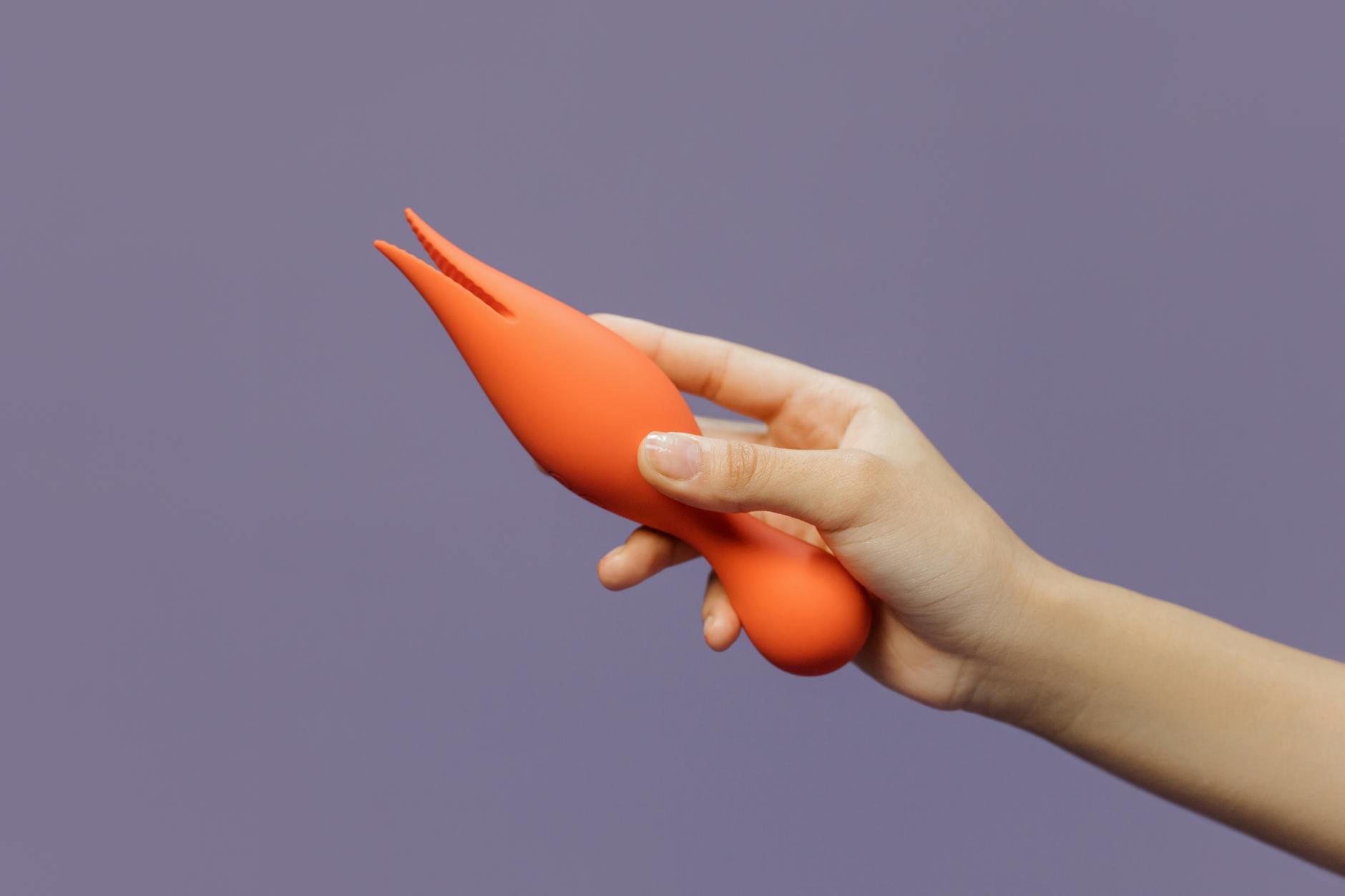
You want to introduce a lemon vibrator. Your partner hears: "You're not doing it right." They hear: "I need something else." They hear: rejection wrapped in silicone.
It's not rational. It's also completely normal. And it's fixable, but not with more intensity or by pretending the conversation doesn't matter.
Male partners especially (though not exclusively) often experience a vibrator as a threat to their role. Decades of messaging says "real men" deliver pleasure with their bodies alone. A lemon clitoral vibrator becomes evidence of failure, even though it's usually about biology, not skill.
Female and non-binary partners sometimes worry too: that you'll prefer the toy, that you'll only want to use it solo, that wanting something different means the relationship is broken. All of these are fears about inadequacy wearing a practical disguise.
Here's what matters: these feelings are valid. They're also not actually about the vibrator.
Don't lead with the toy. Lead with the information.
Start with something like: "I've been reading about how our bodies change, and I realized I want to explore pleasure differently. Not because anything's wrong with us, but because I think it could feel even better. I want to do this with you, not instead of you."
Then wait. Let them ask questions. Resist the urge to convince or defend. If they say, "Does that mean I'm not enough?", the answer is: "No. It means I want to discover new things about myself with you. That's different."
This matters: you're not asking permission. You're inviting them into the discovery. There's a difference, and your partner will feel it.
Wand vibrators feel clinical. They're large, obvious, they dominate the scene. A lemon clitoral vibrator feels smaller, more intimate, almost like a secret you're sharing rather than a thing replacing them.
More importantly, lemon vibrators use suction technology, not blunt vibration. That's a real advantage when you're trying to introduce a toy to a sensitive partner: you can describe it as "sensation," not "machine." It feels softer, more responsive, less like you're choosing aluminum over them.
You can also use it while they're inside you, or have them hold it and control the intensity while you guide them. The friction isn't there. The control can be shared. That changes everything about how the experience feels for both of you.
The moment you open the box, the narrative matters.
Instead of "I want to use this," try: "I want us to explore this together. You're in control of the intensity." Hand them the lemon vibrator. Let them feel how quiet it is, how light it is. Let them understand that this isn't a replacement; it's an addition.
Start with them using it on you while you're kissing them. Their hand is holding it, which means their body is still central to the experience. Their presence still matters. In fact, it matters more because now they're learning what actually gets you there, what pattern, what rhythm, what combination.
Many partners report that this is when resistance transforms. Once they realize they can see exactly what you respond to, control the sensation in real time, and watch you have better orgasms, the tool stops feeling like competition. It starts feeling like information they were never given before.
Some partners won't come around immediately. That's okay, and it doesn't mean the relationship is broken or that you can't use lemon vibrators.
But here's the thing: if your partner is so insecure that they won't let you explore your own pleasure, that's a relationship problem, not a vibrator problem. It's worth naming.
You could say: "I hear that this makes you uncomfortable. I also need you to hear that my pleasure matters to me. I'm not asking you to leave the room. I'm asking you to trust that wanting to feel good doesn't mean I don't want you. Those are two separate things."
Then use your lemon vibrator. Alone if that's what you need to do. Your body is yours. Your pleasure is yours. A good partner wants that for you even if it takes them time to get comfortable with the tool.
Start slowly. Use it over your underwear first, or over external areas, not immediately internal. This isn't about racing to orgasm; it's about both of you getting curious together.
Talk as you go. "That feels good here." "A little softer." "Keep doing that." This running commentary does two things: it keeps your partner engaged and it teaches them what you actually enjoy. Most partners have no idea. This is their master class.
Take turns holding the lemon vibrator. Let them use it on you for a while, then let them guide your hand while you use it on yourself. This shared control is what keeps it feeling intimate instead of isolating.
Use it as foreplay, not as the main event. The tool enhances what's already happening between you. It doesn't replace their touch or attention. It sits alongside it.
If penetration is part of what you do together, many partners find that using a lemon clitoral vibrator while they're inside you is where resistance really melts. The sensation is deeper, the pleasure is more obvious, and they're still central to the experience. This is often the tipping point where partners shift from skeptical to enthusiastic.
If your partner refuses to engage with your pleasure, uses the vibrator as a reason to withdraw, or makes you feel bad for wanting to explore your body, that's not about lemon vibrators anymore.
That's about whether your partner respects your autonomy. Couples counseling can help reframe this. A therapist trained in sexual health and relationship dynamics can often bridge the gap where conversations alone can't.
You deserve a partner who wants your pleasure as much as they want their own. Full stop.
Partners who come around often become the biggest advocates. Once they realize that better orgasms for you often lead to better sex for both of you, resistance usually dissolves. They're not competing with the lemon vibrator; they're finally getting to play with you on the same team.
That's the real shift. Not "vibrator or partner," but "partner and vibrator, working together to figure out what actually feels incredible."
That conversation takes courage. But it's the conversation that actually deepens intimacy. The tool is just the beginning.
Probably initially, if the conversation isn't framed right. But here's the thing: their insecurity isn't your job to manage. Your job is to pursue your own pleasure. A healthy partner will adjust. One who won't is showing you something important about the relationship. That's not the vibrator's fault.
Absolutely. In fact, many couples find it's the easiest way to introduce toys because it stays focused on clitoral pleasure, not penetration. It feels more like adding sensation to what's already happening between you, not introducing a "third party." Start with them holding it and controlling the intensity, and most weirdness dissolves immediately.
Great. Some people assume clitoral vibrators are only for people with vulvas, but pleasure is pleasure. If your partner wants to explore sensation, that's their choice. The best couples are the ones who support each other's curiosity without ego.
Don't lead with the tool. Lead with the conversation about wanting to explore pleasure differently. Make it clear you want to do this with them, not instead of them. Then listen to what they're actually scared of. Usually it's not the vibrator; it's feeling inadequate. Address that fear, not the tool.
Yes. Alone, it's about your pleasure on your timeline. With a partner, it becomes about communication, vulnerability, and learning what actually works for both of you. Using toys together is often harder emotionally but more rewarding relationally because it requires honesty and trust. If your partner resists, how to use a lemon vibrator when your partner isn't interested in toys covers that terrain more directly.
Not permanently. But yes, in the early days, keeping it somewhere private until you've had deeper conversations makes sense. You're not being deceptive; you're managing the pace of the conversation. Once the emotional work is done, having toys visible on a nightstand becomes normal. You're not hiding; you're just being thoughtful about timing.
Introducing a lemon vibrator to a sensitive partner isn't really about the vibrator. It's about expanding what you both believe is possible for pleasure, and what you believe about each other's roles in creating it. That takes vulnerability from you and courage from them.
But couples who make this work often tell me the same thing: it opened a conversation they desperately needed. Suddenly they're talking about pleasure, desire, what actually works, what they've been faking. A toy became permission to tell the truth.
That's what makes it worth doing. If your relationship is solid and your partner is open to growth, this tool becomes a bridge to deeper intimacy. If your relationship is fragile and your partner uses it as a weapon, that's telling you something too.
Either way, you'll know more about what you're working with. And your pleasure matters enough to find out.